Principle
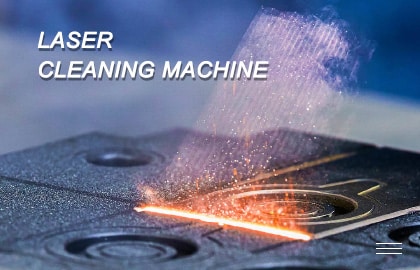
Laser cleaning technology refers to the use of high-energy laser beam irradiation of the surface of the workpiece, so that the surface of the dirt, rust spots or coatings occur instantaneous evaporation or stripping, high-speed and effective removal of the cleaning object surface attachments or surface coatings, so as to achieve a clean process. Laser cleaning technology is based on laser and material interaction effect of a new technology, and the traditional mechanical cleaning method, chemical cleaning method and ultrasonic cleaning method is different, laser cleaning does not require any ozone layer depletion of CFC organic solvents, non-polluting, no noise, harmless to human beings and the environment, is a “green” cleaning technology.
Laser cleaning contains both physical and chemical processes, in more cases is based on physical processes, accompanied by some chemical reactions. The main process can be summarized into three categories, including gasification process, shock process and oscillation process, respectively, the main corresponding technology for wet laser cleaning technology, laser plasma shock wave technology and dry laser cleaning technology.
Vaporization process: when the high energy laser irradiation to the material surface, the surface absorbs the laser energy converted into internal energy, so that the surface temperature rises rapidly, reaching the material vaporization temperature above, so that the pollutants in the form of steam from the material surface. In the surface pollutants on the laser absorption rate is significantly higher than the absorption rate of the substrate on the laser, selective vaporization usually occurs, a more typical application case is the stone surface dirt cleaning. As shown in the figure below, the contaminants on the surface of the stone have a stronger absorption of the laser and are quickly vaporized.
When the pollutants are removed, the laser irradiation to the stone surface, the absorption is weaker, more laser energy is scattered by the stone surface, the stone surface temperature change is small, the stone surface is therefore protected from damage.
Typical chemical-based process is in the use of ultraviolet wavelength laser for cleaning organic pollutants occur, known as laser ablation (Ablation). UV lasers have short wavelengths and high photon energies, such as the KrF excimer laser, which has a wavelength of 248 nm and a photon energy of up to 5 eV, which is more than 40 times the photon energy of a CO2 laser (0.12 eV). Such high photon energy is enough to destroy the molecular bond of organic matter, so that the organic pollutants in the C-C, C-H, C-O, etc. in the absorption of laser photon energy to break, thus generating cracking gasification, organic pollutants are therefore removed from the surface.
Shock process: The shock process is a series of reactions that occur during the action of the laser and the material, which in turn forms a shock wave on the surface of the material. Under the action of the shock wave, the surface pollutants are broken up and turned into dust or fragments stripped from the surface. There are a variety of mechanisms that cause shock waves, including plasma, steam, rapid thermal expansion and contraction phenomena.
Oscillatory process: The process of heating up and cooling down the material under the action of short pulses is extremely rapid. Since different materials have different coefficients of thermal expansion, the surface contaminants and the substrate will undergo high-frequency thermal expansion and contraction of varying degrees under short-pulse laser irradiation, resulting in an oscillatory effect that causes the contaminants to peel off from the material surface. In this peeling process, the vaporization of the material may not occur, and does not necessarily produce plasma, but relies on the oscillating effect of the contaminant and the substrate interface in the formation of the shear force destroys the contaminant and the substrate bond.
Studies have shown that when the laser incidence angle is slightly increased, can increase the laser and particle contaminants and substrate interface contact, reduce the threshold of laser cleaning, the oscillation effect is more obvious, cleaning efficiency is higher. However, the angle of incidence should not be too large, too large an angle of incidence will reduce the energy density acting on the surface of the material, weakening the cleaning ability of the laser.
Applications
At present, laser cleaning technology has been applied in many fields such as instrument manufacturing, aviation, railroad, cultural relics protection and medical treatment.
1、Precision instruments
In the precision instrument parts used to lubricate and corrosion resistance of esters and mineral oil to remove, usually using the traditional chemical methods, and chemical cleaning often still have residues. Laser de-esterification completely removes esters and mineral oils without damaging the surface of the part. The laser induces the explosive vaporization of a thin layer of oxides on the surface of the part to form a shock wave, resulting in the removal of dirt, rather than mechanical interaction.
2, rail
At present, the rail pre-weld cleaning of all grinding wheels, abrasive belt grinding cleaning, serious damage to the base material, residual stress is serious, and annual consumption of a large number of abrasive wheel consumables, high cost, the environment caused by serious dust pollution. Laser cleaning for China’s high-speed railroad track laying production to provide high-quality, efficient green cleaning technology, to solve the above problems while eliminating seamless rail holes, gray spots and other welding defects, to improve the stability and safety of China’s high-speed railroad operation.
3、Aviation industry
The surface of the airplane needs to be completely removed from the old paint before repainting and maintenance. Chemical immersion / wipe is the main method of paint removal in the field of aviation, the method caused a large number of chemical subsidiary waste, but also can not realize the local overhaul of paint, the process of heavy workload, health hazards. Laser cleaning can realize the high quality of aircraft skin surface paint removal.
4, cultural relics protection industry
Laser cleaning of cultural relics, artifacts and buildings have been very widely used. In Europe, people have cleaned a variety of buildings, such as Poland’s Martyrs’ Tomb, London’s West Executive Palace and so on. Using KrF excimer laser, with a wavelength of 1.06nm laser can effectively stone carvings and other artifacts (such as limestone, marble and bone) of the dirt clean, and no damage to the artifacts themselves. However, it should be noted that the application of laser cleaning technology is very reliable, but the laser is not all cultural relics can be cleaned, such as colorful and diverse artifacts, due to the different colors of the laser absorption chromatography is different, resulting in the absorption of energy size is not the same, so the energy absorption of the part of the high will be damaged.
5、Medical industry
Laser cleaning has been used in the field of cleaning tattoos, tattoo eyebrows. In the past, the use of chemical drugs to clean or for near step tattoo coated cover, not only can not completely clean off the pigment, but also leave scars, and even health hazards; will be the laser effect on the affected area, the use of laser energy will be transmitted to the rapid fragmentation of pigment particles, through the skin peeling as well as cellular phagocytosis metabolism to remove the tattoo pigment, and the laser cleaning effect is good, and the patient’s skin without harm.
Advantages and disadvantages
Laser cleaning advantages, including 1, green, without the use of any chemicals and cleaning solutions; 2, cleaning waste mainly solid powder-based, small size, easy to store, can be recycled; 3, non-contact cleaning, no damage to the workpiece, no media residue, does not produce secondary pollution; 4, fiber-optic transmission, can be operated at a distance, for the hazardous places to clean, to ensure the safety of personnel; 5, can be combined with computer Numerical control systems or robots, robots with the realization of automatic cleaning, improve production efficiency, reduce manual labor intensity; 6 no consumables, low maintenance costs.
At the same time, the current shortcomings of laser cleaning should not be ignored.
First of all, laser cleaning equipment costs are relatively high. Today, laser cleaning has developed from 100 watts to kilowatts of power, procurement costs have also been significantly reduced, but still maintains the price of 100,000 to hundreds of thousands of dollars, while the traditional cleaning is very cheap, dry ice cleaning equipment as low as more than 10,000 yuan.
Secondly, laser cleaning is good at dealing with flat dirt, which is also its limitations. Meet the irregular shape, including corner bit, narrow space workpiece, laser cleaning is difficult to play a role. For example, similar to the inner wall of the pipeline workpiece internal cleaning, compared with laser cleaning, full immersion pickling effect is better.
Finally, although laser cleaning to deal with rust effect is better, but the actual application, production equipment or product surface dirt composition is diverse, such as oil, semi-solidified matter. For this kind of dirt, how much power of the laser is the most appropriate is the key issue. At present, the laser cleaning power has been able to achieve several kilowatts of equipment, but cleaning is not the higher the better, whether the current high-power beam will bring damage to the surface layer of the workpiece, and how to control the degree of damage, is still in need of further research.