

Welding galvanized steel requires specialized techniques and safety precautions due to its protective zinc coating. While this coating provides excellent corrosion resistance, it creates unique challenges during the welding process. This comprehensive guide will walk you through everything you need to know about welding galvanized steel safely and effectively, from understanding the material to selecting the right techniques and equipment.
What is Galvanized Steel?
Galvanized steel is regular steel that has been coated with a layer of zinc to protect it from corrosion. This protective coating acts as a sacrificial barrier, preventing the steel from rusting when exposed to moisture and environmental elements. The zinc layer can be applied through several methods, with hot-dip galvanizing being the most common technique, where steel is submerged in a bath of molten zinc.
The galvanizing process has existed for more than 250 years and has been a staple in North American industry since the 1890s. Due to its excellent corrosion resistance, galvanized steel is commonly used in:
- Outdoor constructions (bridges, fences, railways)
- Automotive components
- Home appliances
- Construction materials
- Telecommunications infrastructure
- Energy sector applications
Challenges of Welding Galvanized Steel
Welding galvanized steel presents two primary challenges that make it more difficult than welding regular steel:
1. Health and Safety Concerns
When welding galvanized steel, the zinc coating vaporizes at approximately 900°C, which is well below steel’s melting point of about 1500°C. This creates zinc oxide fumes that mix with the air. These fumes can cause:
- Metal fume fever: A flu-like illness with symptoms including fever, chills, nausea, headache, fatigue, and muscle aches
- Respiratory issues: Prolonged exposure can lead to more serious health problems
2. Welding Quality Issues
The zinc coating creates several technical challenges:
- Reduced penetration: The zinc coating makes achieving proper weld penetration more difficult than with uncoated steel
- Weld porosity: The vaporizing zinc can create bubbles in the weld pool, leading to porosity in the finished weld
- Inclusions: Zinc can become trapped in the weld, creating weak points
- Corrosion issues: Removing the zinc coating for welding exposes the steel to potential corrosion
- Steel embrittlement: Liquid zinc can penetrate into the welded metal, sometimes referred to as zinc-penetration cracking, which can lead to cracking along the throat of the weld and the heat-affected zone (HAZ)
Safety Precautions for Welding Galvanized Steel
Before attempting to weld galvanized steel, implement these essential safety measures:
Proper Ventilation
Working in a well-ventilated area is crucial when welding galvanized steel. Options include:
- Local exhaust ventilation: Position fume extraction equipment as close as possible to the welding area
- General ventilation: Ensure good airflow throughout the workspace
- Outdoor welding: When possible, weld in open-air environments
Personal Protective Equipment (PPE)
Always wear appropriate PPE, including:
- Respirator: Use a respirator rated specifically for welding fumes if adequate ventilation cannot be provided
- Welding helmet: Protects your face and eyes from sparks and UV radiation
- Gloves: Heat-resistant welding gloves
- Long sleeves and pants: Made from fire-resistant materials
- Safety glasses: Wear under your welding helmet for additional eye protection
Best Welding Methods for Galvanized Steel
Several welding processes can be used for galvanized steel, each with its advantages and considerations:
Gas Metal Arc Welding (GMAW/MIG)
GMAW, also known as MIG welding, is often preferred for galvanized steel due to its versatility and ease of use.
Advantages:
- Excellent for thinner materials
- Semi-automatic process that’s convenient and easy to use
- Good arc stability, even with the galvanized coating
Recommendations:
- Use pure CO₂ shielding gas for better weld penetration, though this produces more spatter
- Alternatively, use Ar-CO₂ or Ar-CO₂-O₂ mixes for less spatter and superior weld bead appearance
- A 92% Ar-5% CO₂-3% O₂ mixture provides excellent results on galvanized sheet up to 3.0 mm thickness
- Reduce welding speed by 10-20% compared to uncoated steel to allow the zinc coating to burn off
- For thicker galvanized coatings, increase the current by approximately 10A to help burn away extra zinc
Shielded Metal Arc Welding (SMAW/Stick)
SMAW is recommended only for galvanized steel of 1.6 mm thickness or thicker, as burning through can occur on lighter gauges.
Recommendations:
- Apply the welding electrode more slowly than usual with a whipping action
- Maintain a short arc length for better control of the weld pool
- Use slightly wider gaps (up to 2.5 mm) for better penetration
- Both rutile and basic coated iron powder electrodes perform well on galvanized steel
- Cellulose-coated electrodes have shown good results for reinforcement welding
Gas Tungsten Arc Welding (GTAW/TIG)
GTAW offers greater control and can produce high-quality welds, though it’s generally slower than GMAW.
Recommendations for TIG brazing:
- Hold the weld torch at a 70° angle rather than the 80° angle normally used for uncoated steel
- Increase shielding gas flow from 6 to 12 l/min to flush zinc oxide fume from the electrode area
- Play the arc on the filler wire rather than directly on the weld area to prevent undue coating damage
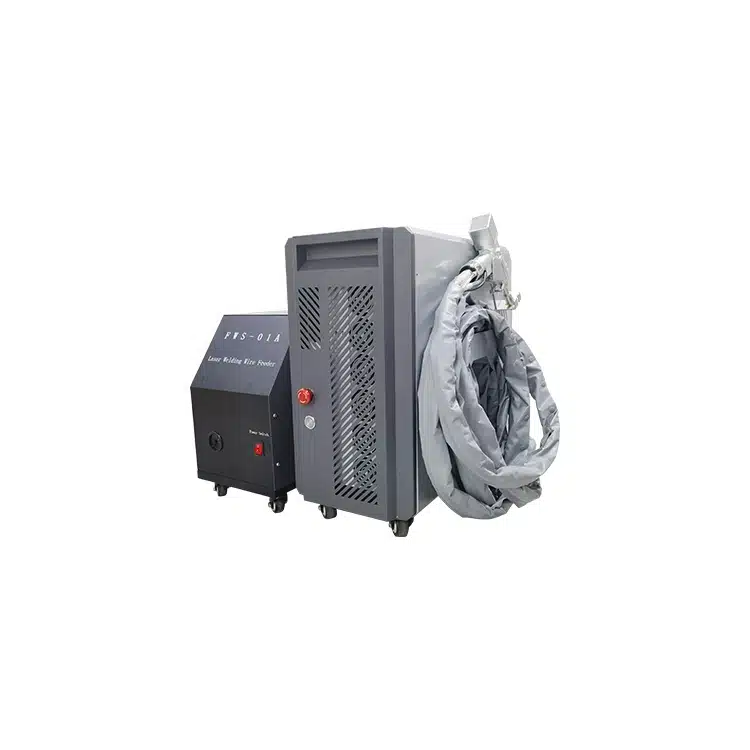
Laser Welding
Laser welding is a newer method that offers several advantages for galvanized steel:
Advantages:
- Concentrates energy in a very small spot for clean, precise welds
- Minimizes heat-affected zones, reducing metal distortion
- Faster completion time compared to traditional methods
- Better preservation of the protective zinc coating
- Energy efficient compared to older welding methods

Step-by-Step Guide to Welding Galvanized Steel
1. Preparation
Clean the surface: Ensure steel surfaces are free from contaminants like oil, grease, paint, or rust using methods such as solvent cleaning, wire brushing, or abrasive blasting.
Joint preparation: Create clean, well-fitted joints using appropriate techniques like beveling or chamfering.
Remove zinc coating (optional): For better results, consider removing the zinc coating from the immediate weld area. This can:
- Reduce zinc oxide fumes during welding
- Eliminate weld porosity
- Improve weld penetration and quality
Preheat the metal: Depending on the steel grade and thickness, preheating may be necessary to reduce the risk of hydrogen cracking and prevent the metal from cracking during welding.
2. Welding Process
Select appropriate parameters: Set voltage, amperage, and travel speed according to the welding procedure specification (WPS) to achieve proper weld penetration and fusion.
Adjust welding speed: Reduce welding speed by 10-20% compared to uncoated steel to allow the zinc coating to burn off at the front of the weld pool.
Welding positions: Different positions require specific adjustments:
- For overhead position on heavily coated steel, increase weld current by 10A and voltage by 1V
- Vertical downwards position may require a 25-30% speed reduction
- Butt welds in overhead and horizontal-vertical positions require less speed reduction as zinc vapor rises away from the weld area
Filler material: For MIG welding, consider using ER70S-4 wire for the root pass, especially where zinc-penetration cracking is more likely to occur. This wire contains less silicon than the commonly used ER70S-6, which can be used for fill passes after depositing the root pass.
3. Post-Weld Treatment
Inspect welds: Check for defects such as cracks, porosity, or incomplete fusion. Perform necessary repairs before proceeding.
Restore corrosion protection: All uncoated weld areas must have corrosion protection reinstated to maintain the integrity of the galvanized coating. Options include:
- Zinc-rich paint: Apply to the weld area after proper surface preparation
- Re-galvanizing: While time-consuming, this is the most effective method to maintain corrosion resistance
- Cold galvanizing compound: A zinc-based coating that can be applied to the weld area
Properties of Welds in Galvanized Steel
When proper welding conditions are used, welds in galvanized steel exhibit properties equivalent to those in uncoated steel:
- Tensile strength: Comparable to welds in uncoated steel
- Bend properties: No significant difference from uncoated steel welds
- Impact properties: The presence of zinc at typical levels does not affect impact properties
- Fracture toughness: Unaffected by the presence of galvanized coatings
- Fatigue strength: Equivalent to welds in uncoated steel, provided porosity is minimized
Advanced Tips for Professional Results
- Use spatter release compounds: These can prevent adhesion of weld spatter to the gun nozzle and workpiece, reducing cleanup time.
- Consider joint design: Slightly wider gaps must be provided for butt welds in galvanized steel compared to uncoated steel due to reduced penetration.
- Try a side-to-side movement: A slight side-to-side movement of the welding torch helps achieve consistent penetration when making butt welds in the flat position.
- For reinforcement welding: Both tack welds and load-bearing welds in galvanized steel reinforcement require greater heat input than similar welds in uncoated steel reinforcement.
- Monitor weld appearance: Surface appearance of welds in galvanized steel should be satisfactory, though some weld spatter is normal regardless of the shielding gas used.
By following these guidelines and taking appropriate safety precautions, you can successfully weld galvanized steel while maintaining both the structural integrity of your welds and your personal health and safety. Remember that practice and experience are key to mastering this specialized welding technique.
Common Questions About Welding Galvanized Steel
Yes, galvanized steel can be welded to regular steel using the same techniques described above. The key consideration is managing the zinc coating at the weld interface to prevent porosity and ensure good fusion.
The best method depends on your specific application, but GMAW (MIG) welding is often preferred for its versatility and ease of use. Laser welding offers excellent results with minimal heat-affected zone but requires specialized equipment.
Welding galvanized steel can be done safely if proper precautions are taken, including adequate ventilation and appropriate personal protective equipment. Never weld galvanized steel without these safety measures in place.
While not always necessary, removing the zinc coating from the immediate weld area can:
1. Reduce harmful fumes
2. Improve weld quality by minimizing porosity
3. Enhance penetration
4. Reduce the risk of zinc-penetration cracking