
When it comes to laser welding machines, there are many types on the market. Among them, two popular options are water-cooled handheld laser welding machines and air-cooled handheld laser welding machines. The two machines differ not only in their cooling methods, but also in several other ways. In this article, we will explore the differences between these two types of welders, how they are cooled, and the corresponding configuration differences.
Let’s start by understanding the cooling methods used in these machines. Water-cooled handheld laser welding machines, as the name suggests, are equipped with a water tank for cooling. Air-cooled handheld laser welders, on the other hand, do not require a water tank; instead, they use a fan to dissipate heat by directing air towards the weld head. The two different cooling methods result in significant differences in appearance, size, and other aspects.
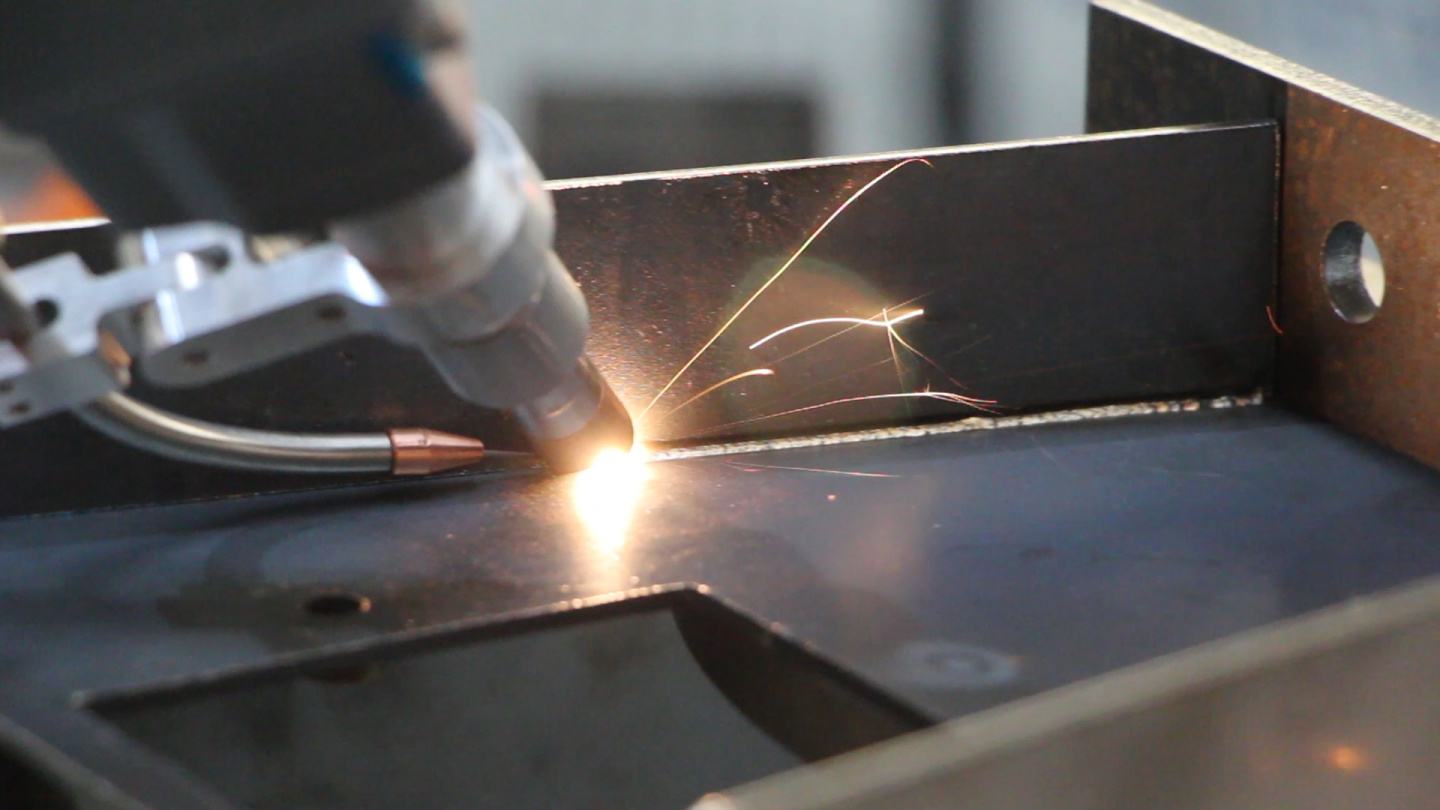
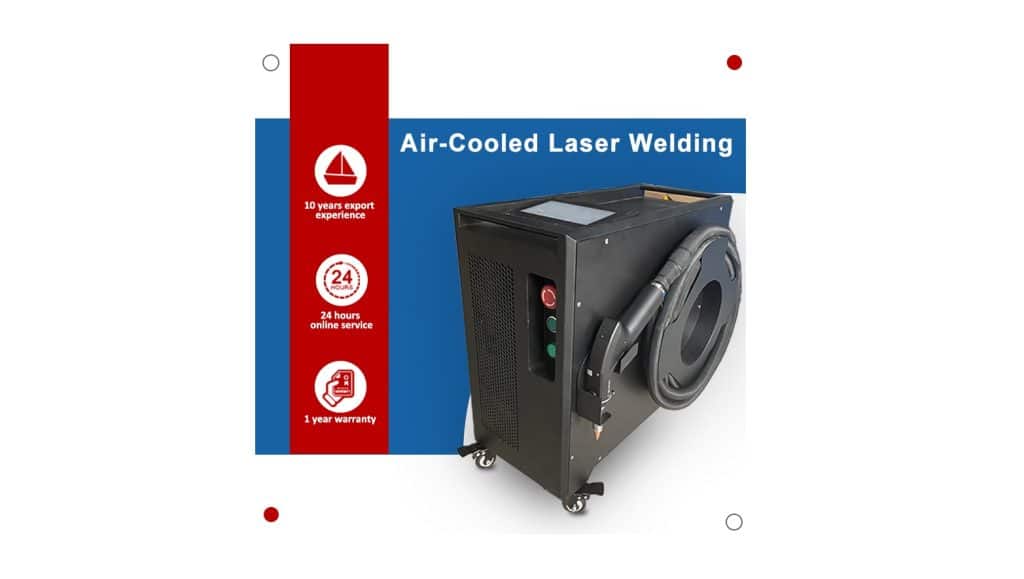
First, let’s take a look at air-cooled laser handheld welding pros and cons:
Advantages: forced air cooling technology is in the form of heat transfer, where the heat generated is conducted to an aluminum radiator, which is naturally heat-transferred by a fan blowing fast-moving ambient air. In contrast to water cooling technology, air cooling does not require additional water cooling tanks, which can reduce the number and size of units.
Disadvantages: Due to the natural convection heat transfer method, the heat dissipation efficiency is affected by the ambient temperature, which cannot be guaranteed in high-temperature environments, leading to an increase in the elevation of the semiconductor laser chip, which reduces the service life of the laser chip and does not meet the requirements for continuous and reliable operation in high-temperature environments.
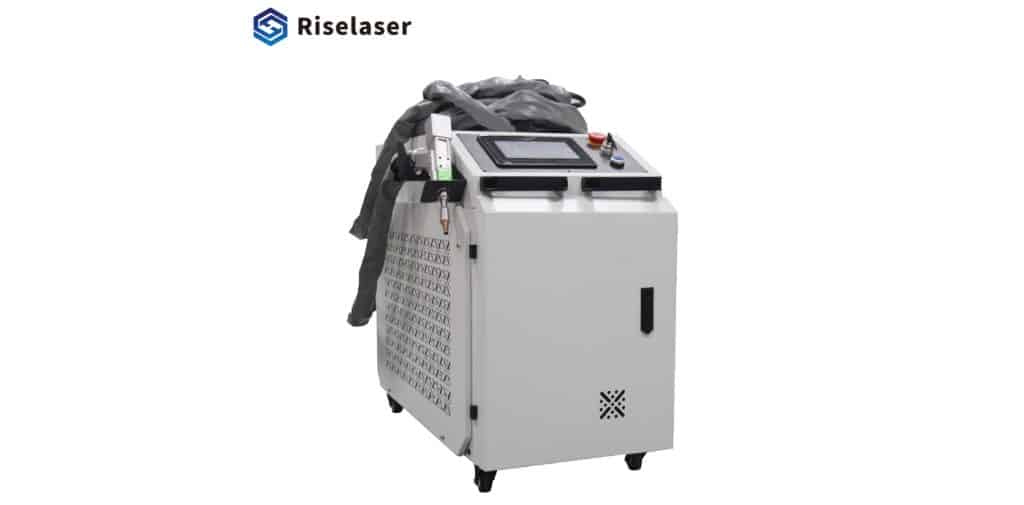
Next, let’s look at the advantages and disadvantages of water-cooled laser handheld welding:
Advantages:The principle is to combine the air-conditioning compressor and fiber laser, through the air-conditioning compressor will be gaseous refrigerant compressed into a high temperature and high pressure gas, and then sent into the condenser for cooling. After cooling, it will become medium temperature and high pressure liquid refrigerant and medium temperature liquid refrigerant, both of which are throttled down through the expansion valve to form a low temperature and low pressure gas-liquid mixture. The mixture is then irradiated by an internal laser, which absorbs heat and evaporates it, converting it back into a gaseous state. The compressor continues to compress, continuing the refrigeration cycle. When heating, the four-way valve enables Freon to flow in the condenser and evaporator in the direction opposite to the direction of refrigeration.
Disadvantages: Due to the adoption of technical principles similar to those of inverter air conditioners, the manufacturing cost is higher than that of the forced air cooling cooling method with ordinary radiators, and secondly, the weight of the equipment is slightly higher.
To sum up, the difference between two small handheld laser welding machines with different cooling methods lies in the differences in the cooling process itself and the corresponding configuration. Water-cooled handheld laser welding machines require a water tank for cooling, while air-cooled types use fans. This fundamental difference affects several aspects, including size, weight, installation process, maintenance requirements and cooling efficiency. By understanding these differences, users can make informed decisions based on their specific welding needs and priorities.