
A laser is a special kind of light beam. The word “laser” is actually an abbreviation for “light amplification by excited radiation,” but you don’t need to memorize such a long name to understand how it works. These powerful beams can be used for a variety of purposes, from cutting metal to helping doctors perform surgery. Let’s take a look at the laser principle and how lasers work and how they differ from ordinary light.

How Lasers are Made
Atoms are the tiny building blocks that make up everything around us. When you energize an atom, tiny particles (called electrons) inside the atom jump to higher energy levels, but they don’t stay there for long. These excited electrons will quickly fall back to normal levels, and when they do, they emit tiny bits of light, called photons.
What makes lasers special is that all these light particles work in perfect synchronization. A normal light bulb emits light in all directions, mixing many different colors. However, the light emitted by a laser travels in a straight line and is usually only one color, which makes it much more powerful and useful.
What Makes Lasers Special
Lasers have some unique features that make them different from regular lights. These special qualities help lasers do jobs that normal light sources can’t handle.
One Color of Light
A laser beam contains just one color of light. This is very different from normal light sources, which usually mix many colors together to make white light. Having just one color of light helps lasers work better for specific jobs, like cutting through metal or sending signals through fiber optic cables. When you need to do something very precise, using one pure color of light gives you much better control.
Straight as an Arrow
Lasers have an amazing ability to shoot light in a perfectly straight line. Unlike regular lights that spread their light everywhere, like a lamp in your room, laser beams stay focused in one direction as they travel. This special quality makes lasers incredibly useful for many different jobs, from measuring long distances to sending signals across space.
Think about how a regular flashlight beam spreads out when you shine it far away. A laser beam is so focused that if you pointed it at the moon, it would only make a spot about two miles wide, even though the moon is nearly 240,000 miles away!
Working Together
The light waves in a laser beam work together like a well-practiced team. All the waves move up and down at the same time and in the same way, which scientists call “coherence.” This teamwork helps the laser beam stay strong and focused over long distances.
Regular light sources, like lightbulbs, send out waves that don’t work together. The laser’s special teamwork lets it do precise jobs like cutting tiny pieces of metal or helping doctors perform delicate surgeries.

How We Make Lasers
There are several steps involved in making a laser. First, you need a special material that can produce more light – this material can be a solid such as a crystal, a liquid, or even a gas. You need to energize this material so that its atoms are excited and ready to release light.
There are three main parts of a laser that work together:
Power supply
The laser must be supplied with energy to work. This can be electricity, light, or even chemicals.
Special light-making materials
This is the heart of the laser. When you give it energy, it produces more and more light waves that work together.
Mirror System
Two mirrors reflect light back and forth through the light-making material. One mirror lets some light out as a laser beam.
The mirror makes the light stronger by bouncing it back and forth many times. When the light is strong enough, it passes through one of the slightly translucent mirrors to form the powerful laser beam we use.
What Makes Lasers Different
Lasers can do things that ordinary light can’t. From cutting metal to performing surgery, people use lasers in many different tasks because lasers have some amazing abilities that make them better than ordinary light.
Very Bright
Lasers pack a huge amount of light energy into a tiny beam. This super bright light can cut through metal, send messages across oceans via fiber optic cables, or help doctors perform delicate surgeries.
Perfect Focus
Lasers can focus all of their energy on a tiny spot, much like a magnifying glass focuses sunlight. This makes them perfect for jobs that require great precision, such as printing tiny computer parts or helping doctors fix eyes.
Great for cutting and joining
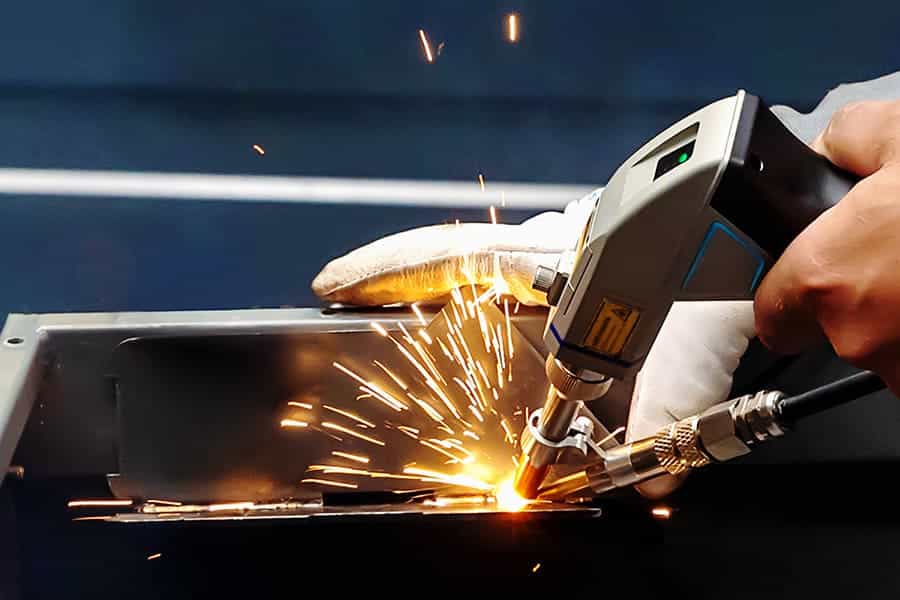
The heat focused by a laser can cut materials with amazing precision. Car companies use lasers to cut metal parts and weld them together perfectly when building cars.
No Touching Required
Lasers can clean and cut without touching the object. This means that cleaning tools last longer and there is less chance of damaging the item being worked on.
Where We Use Lasers
Lasers help us do many different jobs:
Making Things: Factories use lasers to cut and join materials quickly and exactly. The laser beam works like a super-precise knife that never gets dull.
Medical Care: Doctors use lasers for many treatments, from fixing eyes to cleaning teeth. Laser light can do delicate jobs that regular tools can’t handle.
Sending Messages: Laser light carries phone calls and internet data through thin glass cables across the world. The messages travel at the speed of light!
Science Work: Scientists use lasers to measure things and do experiments. The laser’s exact beam helps them make careful measurements.
Wrapping It Up
Lasers have changed how we do many jobs. They can focus intense light on tiny spots, travel far without losing strength, and work with amazing precision. These special abilities make lasers perfect for cutting metal, sending messages, and helping doctors.
As we make lasers even better, we’ll find new ways to use them. From building things in factories to helping people stay healthy, lasers make our lives better in many ways.