
Laser cutting technology has revolutionized the metal fabrication industry with its precision, versatility, and efficiency. Whether you’re a manufacturer looking to upgrade your production capabilities or someone exploring custom metal fabrication options, understanding the fundamentals of laser cutting is essential. This comprehensive guide covers everything you need to know about laser cutting of metal sheets, from basic principles to advanced techniques and future trends.
What is Laser Cutting of Metal Sheets?
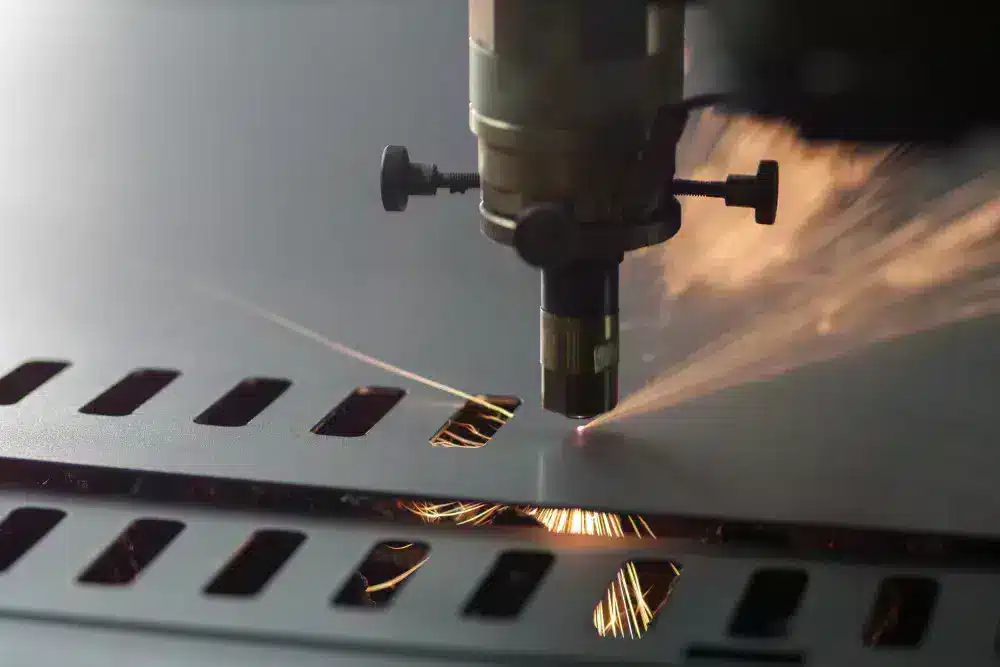
Laser cutting of metal sheets is a thermal cutting process that uses a focused beam of light to melt, burn, or vaporize material along a predetermined path to create precise cuts in sheet metal. This technology directs high-powered laser beams onto metal surfaces, generating enough heat to cut through the material while a gas jet blows away the molten metal, resulting in clean, accurate cuts.
The process began gaining commercial traction in the 1970s and has since evolved dramatically. Today’s laser cutting machines offer unprecedented precision, speed, and versatility, making them indispensable in modern manufacturing. Manufacturing SEO defines laser cutting as the process of making changes to metal sheets to increase their visibility and functionality in various applications.
How Does Sheet Metal Laser Cutting Work?
The sheet metal laser cutting process involves several coordinated steps that transform raw metal sheets into precisely cut components:
Design & Programming: The process begins with creating digital designs using Computer-Aided Design (CAD) software. These designs are then converted into machine instructions through Computer-Aided Manufacturing (CAM) software, which determines the cutting path, speed, and other parameters.
Material Preparation: The metal sheet must be properly cleaned to remove contaminants that could interfere with the cutting process. The sheet is then securely positioned on the cutting bed to prevent movement during operation.
Machine Setup: The operator configures the laser parameters based on the material type and thickness. This includes selecting the appropriate assist gas (nitrogen, oxygen, or compressed air), setting the laser power, and adjusting the focal position.
Piercing and Cutting: The process begins with the laser piercing through the metal to create a starting point. Once pierced, the laser follows the programmed cutting path, melting or vaporizing the material as it moves. The material is securely clamped onto the cutting bed to prevent movement or vibration during cutting, ensuring accuracy.
Inspection and Post-Processing: After cutting, the parts are inspected for quality and may undergo additional finishing processes such as deburring, cleaning, or surface treatments.
The laser beam itself is incredibly powerful, typically concentrating between 1000 to 2000 watts of energy into a beam approximately 1/5 of a millimeter wide. This intense concentration of energy enables the precise cutting of various metal thicknesses.

Types of Laser Cutting Machines for Metal Sheets
Several types of laser cutting machines are available for sheet metal processing, each with distinct advantages for specific applications:
Fiber Lasers
Fiber lasers have become the dominant force in metal cutting technology. These lasers use optical fibers doped with rare-earth elements to generate the laser beam. They excel at cutting reflective metals like aluminum, copper, and brass, and offer superior speed and efficiency for thin to medium-thickness materials.
CO2 Lasers
CO2 lasers use carbon dioxide gas as the medium to generate the laser beam. While traditionally used for non-metallic materials, they can effectively cut certain metals, particularly steel and stainless steel. CO2 lasers and fiber lasers are the two main types used for cutting sheet metal, each with advantages suited for different applications.
Nd: YAG/Crystal Lasers
These solid-state lasers use neodymium-doped yttrium aluminum garnet crystals as the lasing medium. They offer good versatility but have largely been superseded by fiber lasers in many metal-cutting applications.
| Laser Type | Best For | Materials | Thickness Range | Efficiency |
|---|---|---|---|---|
| Fiber | Thin to medium metals, reflective metals | All metals, especially aluminum, copper, brass | 0.5mm – 30mm | High |
| CO2 | Non-metals, some metals | Steel, stainless steel | 0.5mm – 25mm | Medium |
| Nd: YAG | Precision work | Most metals | 0.5mm – 12mm | Medium |
What Metals and Materials Can Be Laser Cut?
Laser cutting technology can process a wide range of metals and materials with varying degrees of efficiency:
Steel and Stainless Steel: These are among the most commonly laser-cut metals, with excellent results in terms of edge quality and precision.
Aluminum, Copper, and Brass: These reflective metals can be effectively cut, especially with fiber lasers. Aluminum sheets are widely used in various industries due to their lightweight properties and corrosion resistance.
Titanium: Often used in aerospace and medical applications, titanium can be laser cut with high precision.
Other Materials: Beyond metals, laser cutters can also process materials like wood, acrylic, paper, textiles, plastics, and rubber.
The maximum cutting thickness varies based on the laser power and material type:
- A 1000W laser can cut carbon steel up to 10mm, stainless steel up to 5mm, and aluminum/copper up to 3mm
- A 3000W laser can cut carbon steel up to 20mm, stainless steel up to 10mm, and aluminum/copper up to 8mm
- A 10000W laser can cut aluminum alloy up to 40mm and stainless steel up to 50mm
Sheet Metal Laser Cutting Techniques
Different laser cutting techniques are employed based on the material, thickness, and desired outcome:
Laser Beam Fusion Cutting
This technique uses an inert gas (typically nitrogen) to blow molten material out of the cutting kerf. The low-reaction process gas continuously vaporizes the cutting gap without oxidizing the cutting edge. Fusion cutting is ideal for cutting thin sheets of aluminum alloys and stainless steel that require high aesthetic appeal and fewer finishing operations.
Laser Beam Flame Cutting
Flame cutting uses oxygen as the assist gas, which creates an exothermic reaction with the metal, providing additional energy to the cutting process. The laser heats the workpiece, creating spontaneous combustion after melting the material. This technique is excellent for cutting mild steel and fusible materials like ceramics, though it may cause oxidation on the cutting surface.
Laser Beam Sublimation Cutting
In sublimation cutting, the material is immediately changed from solid to gas without passing through a liquid state. This technique uses inert gases to blow the material’s vapor out of the kerf, preventing oxidation on the cutting edge. It’s primarily used for cutting organic materials like wood, leather, and textiles.
Each technique produces different edge qualities and is suited to specific materials and applications. The choice of technique significantly impacts the final product’s appearance and structural integrity.
Key Advantages of Laser Cutting Metal Sheets
Laser cutting offers numerous benefits that have made it the preferred method for sheet metal fabrication:
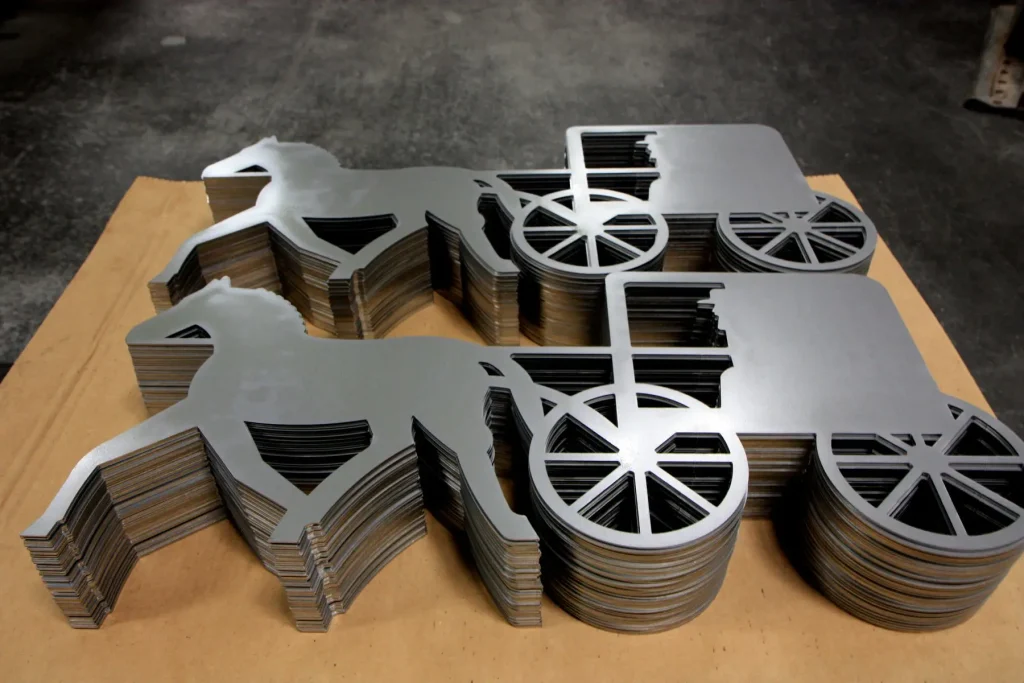
High Precision and Accuracy: Laser cutting machines can achieve extreme precision with accuracy up to 0.0005 inches. This makes them ideal for creating intricate designs and components with tight tolerances.
Automation and CNC Control: The process is controlled by Computer Numerical Control (CNC) systems, requiring minimal human intervention and reducing the margin for error. Once the technical operator inputs the programs, the process runs independently, increasing efficiency and reducing labor costs.
Design Flexibility and Complexity: Laser cutting can produce intricate and complex designs that would be difficult or impossible to achieve with traditional cutting methods. This versatility makes it suitable for a wide range of applications, from simple cuts to elaborate patterns.
Minimal Material Waste: The precision of laser cutting minimizes material waste, making it a cost-effective option for manufacturers. The narrow kerf width (the width of the cut) means more parts can be nested closely together on a sheet.
Clean Edges and Reduced Distortion: Laser cutting produces clean, smooth, and burr-free edges, reducing the need for additional finishing processes. The heat from laser cutting only affects minute portions of the material, preventing warping or distortion.
Fast Turnaround: The speed and efficiency of laser cutting enable quick turnaround times for both prototypes and production runs, helping manufacturers meet tight deadlines.
Common Applications of Sheet Metal Laser Cutting
The versatility of laser cutting technology has led to its adoption across numerous industries:
Industrial Manufacturing: Automotive, aerospace, and electronics industries use laser-cut components for their precision and consistency. From chassis parts to electronic enclosures, laser cutting provides the accuracy these sectors demand.
Medical Equipment: Laser cutting is used to produce trolleys, beds, surgical equipment, orthopedic pins, rods, and other medical devices that require high precision and clean edges.
Architectural and Decorative Applications: Laser-cut metal panels are increasingly popular in architecture and interior design. Room dividers, facades, and decorative elements benefit from the intricate patterns possible with laser cutting.
Jewelry Production: The precision of laser cutting makes it ideal for creating intricate jewelry designs from thin metal sheets.
Aerospace Industries: The aerospace sector relies heavily on laser cutting for producing components with high dimensional accuracy requirements. Aircraft parts, metal detectors, trolleys, and conveyors often incorporate laser-cut components.
Choosing the Right Sheet Metal Laser Cutting Machine
Selecting the appropriate laser cutting machine requires consideration of several factors:
Material Type and Thickness: Different machines excel at cutting specific materials and thicknesses. For example, the Trumpf TruLaser 5030 Fiber can cut steel up to 25mm thick, while the Bodor P-Series can handle steel up to 30mm.
Power Requirements: Laser power significantly impacts cutting capabilities. Options range from 1000W for basic applications to 150kW for ultra-thick plate cutting. The G26035LFA-150kW ultra-high power laser cutting machine can cut carbon steel and stainless steel plates over 400mm thick.
Cutting Bed Size: Consider the maximum sheet size you’ll be working with. Some machines can accommodate sheets up to 1500mm x 3000mm, while others may have smaller or larger capacities.
Automation Features: Modern machines offer features like automated nozzle changing, intelligent part detection, and integrated material handling systems that can significantly improve productivity.
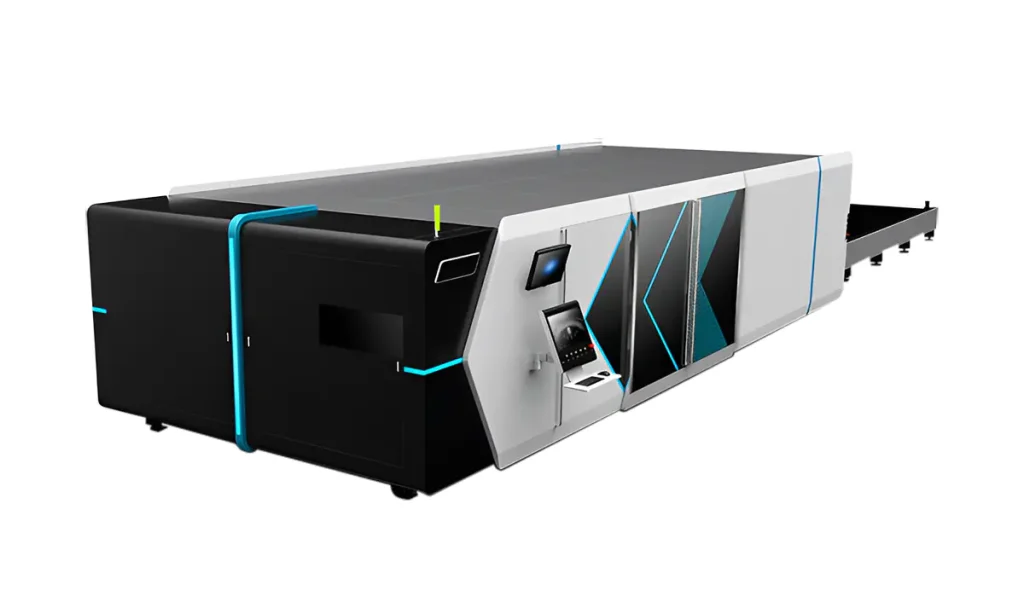
Top Machines for 2025: Leading models include the Trumpf TruLaser 5030 Fiber, Bystronic BySmart Fiber 3015, Mazak Optiplex 3015 Fiber III, Prima Power Laser Genius 1530, and Han’s Laser G3015F, each offering different combinations of power, precision, and automation features.
Cost of Laser Cutting Sheet Metal
The cost of laser cutting sheet metal depends on several variables:
Material Type: Different metals have different costs and ease of cutting. Stainless steel laser cutting, for example, is generally more expensive than aluminum due to material cost and the laser’s power requirements.
Material Thickness: Thicker materials require more power and time to cut, increasing the cost. Cutting a 2 mm thick sheet metal will cost less than cutting a 20 mm thick sheet metal.
Design Complexity: Intricate designs with many cuts or tight corners take longer to produce and may require specialized programming, affecting the final price.
Production Volume: Larger production runs typically benefit from economies of scale, reducing the per-piece cost.
Machine Operating Costs: The type of laser cutter used affects operating costs. Factors include power consumption, maintenance requirements, and consumables like assist gases and replacement parts.
Common Issues and How to Avoid Them
Even with advanced technology, several issues can arise during laser cutting:
Deformed Shapes and Uneven Edges: This often occurs with carbon steel and thin metal plates cut with excessive heating. It can result from reflective properties of the material, improper focal point, or incorrect cutting parameters.
Solution: Control the ideal heating requirements based on material thickness and speed up the laser for tiny shapes to prevent deformities and thermal runaway.
Lens Contamination: Dirty lenses can reduce cutting efficiency and quality.
Solution: Regular cleaning and inspection of optical components is essential.
Gas Pressure Issues: Incorrect gas pressure can lead to poor cut quality or incomplete cuts.
Solution: Ensure proper gas pressure settings for the specific material and thickness being cut.
Nozzle Quality Problems: Worn or damaged nozzles affect the gas flow and cutting performance.
Solution: Regularly inspect and replace nozzles as part of a preventive maintenance routine.
Focus Position Errors: Incorrect focal distance can result in poor cut quality or inability to cut through the material.
Solution: Verify and adjust the focus position for each material and thickness.
A comprehensive maintenance program and pre-cutting inspection routine can prevent many of these issues, ensuring consistent quality and reducing downtime.
Future Trends and Innovations in Laser Cutting
The laser cutting industry continues to evolve with several exciting developments on the horizon:
Ultra-High Power Lasers: The development of 150kW ultra-high power laser cutting machines represents a revolutionary breakthrough, enabling cutting of ultra-thick plates over 400mm and increasing cutting speed for 100mm stainless steel by up to 500% compared to 60kW machines.
Integration with Industry 4.0: Smart machines equipped with IoT capabilities can be monitored and controlled remotely, providing real-time data on performance and maintenance needs. This connectivity enables predictive maintenance, reduces downtime, and optimizes production processes.
Automation and Robotics: The integration of robotic systems with laser cutting machines enhances productivity and reduces labor costs. Automated material handling, loading, and unloading streamline operations, allowing continuous and uninterrupted production.
Sustainability Initiatives: Eco-friendly practices are becoming increasingly important in metalworking. Laser cutting technology leads sustainable metalworking by reducing material waste and energy consumption. The precision of laser cutting minimizes scrap, while energy-efficient machines reduce electricity usage.
Ultrafast Lasers and Green Lasers: Ultrafast lasers deliver unparalleled precision with minimal heat-affected zones, while green lasers excel at cutting reflective materials like copper, brass, and gold. These advancements are opening new possibilities in electronics manufacturing and other industries.
Frequently Asked Questions
Yes, both CO2 and fiber lasers can cut metal. Metals such as steel or ferrous materials can be cut more easily than light or non-ferrous metals like copper or aluminum. Fiber lasers are particularly effective for cutting reflective metals.
Fiber lasers are generally considered the best for sheet metal cutting due to their efficiency, speed, and ability to cut reflective metals. For thicker materials, high-power fiber lasers (6kW-12kW) offer the best performance.
The maximum thickness depends on the laser power and material type. A 1000W laser can cut up to 10 mm carbon steel, while a 10000W laser can cut up to 50 mm stainless steel and 40 mm aluminum. Ultra-high power 150 kW lasers can cut carbon steel and stainless steel plates over 400mm thick.
Each technology has its strengths. Laser cutting offers high precision and clean edges, making it ideal for intricate designs and thinner materials. Plasma cutting is faster and more cost-effective for thicker conductive metals, but less precise. Waterjet cutting can handle any material and doesn’t create heat-affected zones, but it’s slower and has higher operating costs.
The most consistent file formats for laser cutting are PDFs of vector files. Other accepted formats include EPS, CDR, and DXF. For best results, send your drawing in two formats (e.g., PDF + AI or DXF + PDF) so the fabricator can compare them and ensure everything imports correctly.
Laser cutting of metal sheets continues to advance, offering manufacturers and fabricators increasingly powerful tools to create precise, complex components with greater efficiency than ever before. By understanding the technology, techniques, and trends in this field, you can make informed decisions about incorporating laser cutting into your production processes or selecting the right laser cutting service for your needs.