

What makes a welding process not only precise and clean but also powerful enough for aerospace and microelectronics alike? Is there a solution that can handle both deep weld penetration and delicate joints with minimal distortion? Enter laser beam welding — a high-performance technique revolutionizing modern manufacturing.
What Is Laser Beam Welding and How Does It Work?
Laser beam welding (LBW) is a fusion welding process that uses a focused laser to join multiple pieces of metal through deep penetration and rapid melting. Unlike traditional methods, LBW is a non-contact process that offers exceptional precision and speed.
A high-intensity laser beam, generated by a laser source and focused through optical components, is directed at the weld zone. The intense energy melts the base materials to form a molten weld pool, which solidifies into a clean, high-strength joint. This makes LBW ideal for automation, tight-tolerance assemblies, and difficult-to-weld alloys.
The History and Evolution of Laser Beam Welding
First developed in the 1960s, laser welding emerged shortly after the invention of the laser itself. Early applications were limited to lab-scale experiments due to high costs and complex setups. Over time, the technology evolved with advancements in fiber lasers, optical systems, and control software.
Today, LBW is a mainstay in industries like automotive, aerospace, electronics, and medical device manufacturing. The shift from bulky CO₂ lasers to compact solid-state and fiber lasers for laser beam welding has made the technology more accessible, efficient, and adaptable.
What Is the Laser Beam Welding Process?
The laser beam welding process involves several critical stages that must be carefully executed to ensure optimal results:
1. Joint Preparation
- Materials are thoroughly cleaned to remove contaminants
- Precise alignment is critical as LBW requires tight tolerances
- Surface preparation may be needed for highly reflective materials
2. Laser Parameter Setup
- Power settings are calibrated based on material type and thickness
- Pulse duration and frequency are optimized for the specific application
- Travel speed and focus position are adjusted for the desired penetration depth
3. Welding Execution
- The beam is applied either continuously (for seam welding) or in pulses (for spot welding)
- Shielding gas may be used to prevent oxidation
- In keyhole welding, the high power density creates a vapor cavity that enables deeper penetration
4. Cooling and Solidification
- The weld rapidly cools, forming a strong joint
- The controlled cooling process minimizes thermal distortion and microstructural damage
This precise process control allows laser welding to achieve minimal heat-affected zones (HAZ), making it suitable for heat-sensitive components and high-precision applications.

Types of Laser Welding Techniques
Heat Conduction Laser Welding
Used for thin materials and cosmetic joints, this method heats the surface without forming a keyhole. It results in shallow, smooth welds ideal for electronics or jewelry.
Deep Penetration (Keyhole) Laser Welding
High power density forms a vapor cavity (keyhole) that allows deeper welds. This technique is common in automotive chassis and aerospace components.
Laser Welding with Powder Deposition
This hybrid approach combines laser welding with metal powder feeding. It enables additive manufacturing or part repair with precise material deposition.
Multi-Axis Laser Welding for Complex Parts
Using programmable motion systems, multi-axis laser beam welding can access intricate geometries and angles, critical for turbines, engine components, and medical implants.
Hybrid and Dissimilar Metal Laser Welding
Combines laser with MIG, TIG, or plasma for enhanced penetration or bridging gaps. Also allows welding of dissimilar metals like aluminum and steel with improved fusion.
Types of Laser Beam Welding Machines and Tools
| Machine Type | Description | Best Applications |
|---|---|---|
| Handheld Laser Welding Machines | Lightweight, portable systems gaining popularity | Lightweight, portable systems are gaining popularity |
| Robotic and Remote Laser Welding Systems | Fully automated systems for high-speed operation | Automotive assembly lines, industrial fabrication |
| Battery Welding Laser Machines | Specialized for battery connections | Electric vehicles, consumer electronics |
| Electron Beam Welding | Requires vacuum chambers, higher complexity | Deep welds, specialized applications |
Laser Sources for Industrial Laser Welding
| Laser Type | Characteristics | Ideal Applications |
|---|---|---|
| CO₂ Gas Lasers | Cost-effective, less effective on reflective metals | Non-metals, thick-section welding |
| Solid-State Lasers (Nd:YAG) | Fiber delivery, pulsed operation capability | Precision micro-welding, electronics |
| Fiber Lasers | Highly efficient, maintenance-free, continuous/pulsed | Industrial-scale LBW applications |
| Adjustable Ring Mode Tools | Advanced beam shaping, modulated energy distribution | Heat-sensitive materials, precision work |
Advantages of Laser Beam Welding in Modern Manufacturing
- Precision: Micron-level accuracy, ideal for medical and aerospace
- Speed: High welding speeds reduce production cycles
- Low heat input: Minimizes warping and HAZ (heat-affected zones)
- Automation-ready: Easily integrates with robotics and vision systems
- Clean processing: No filler material or contact needed
What Are the Disadvantages of Laser Beam Welding?
Despite its strengths, there are several disadvantages of laser beam welding:
- High initial cost for laser systems and optics
- Precision alignment is required for joint fit-up
- Limited thickness without keyhole or hybrid approaches
- Reflective materials like copper and aluminum require specialized setups
Understanding these limitations helps avoid costly mistakes and choose suitable applications.
Cost Analysis and ROI of Using a Laser Beam Welding Machine
Comparing Laser Welding Tools and Setup Costs
Entry-level systems start from $30,000, while advanced robotic setups can exceed $500,000 depending on the configuration.
Operational Costs and Efficiency in Laser Welding
Laser systems have low consumable usage and require minimal maintenance, making them cost-effective in the long run.
ROI Scenarios for Different Laser Welding Applications
In automotive or electronics, the speed and reliability of LBW can recover initial costs within months due to reduced rework and downtime.
Budget Tips for Choosing the Right Laser Beam Welder
- Prioritize based on material type and part volume
- Choose modular platforms for scalability
- Consider renting or leasing high-end machines for short-term projects
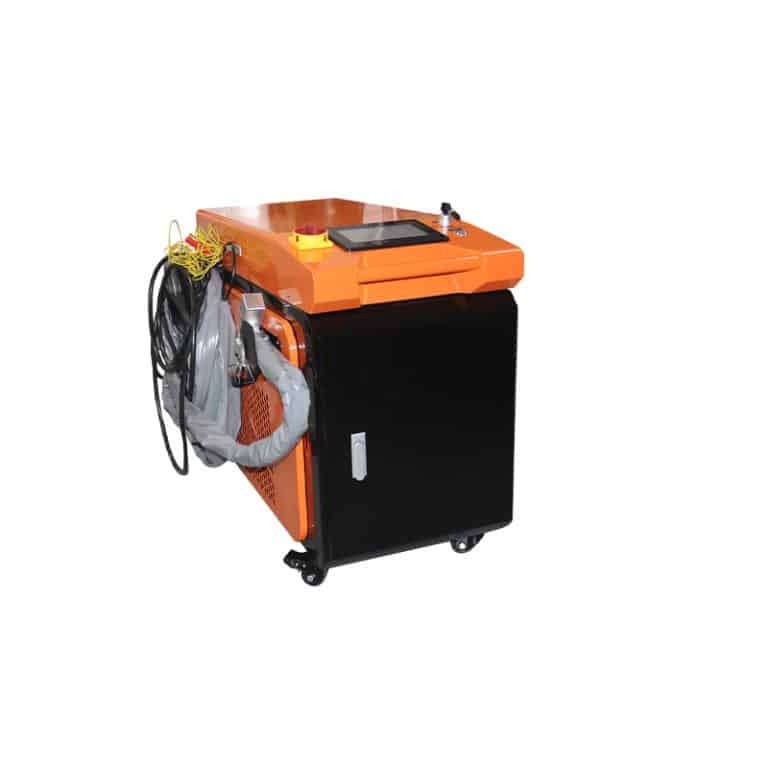
Real-World Applications of Laser Beam Welding
| Industry | Applications |
|---|---|
| Automotive | Gear housings, transmission components, battery packs |
| Aerospace | Turbine blades, titanium structures, fuel lines |
| Medical | Surgical tools, implants, pacemaker cases |
| Electronics | Micro-connectors, sensors, PCB shields |
| Luxury Goods | Watch casings, fine jewelry |
Conclusion
Laser beam welding stands at the forefront of precision manufacturing. With multiple techniques, machine types, and laser sources, it offers unmatched adaptability across industries. While there are limitations to consider, the performance, efficiency, and ROI potential make it a valuable addition to any modern production setup.
FAQ
Yes, in many cases, laser welds exceed MIG weld strength due to deeper penetration and lower porosity. However, joint preparation is more critical.
It depends on the application. Laser welding offers higher speed and precision, while TIG may be better for certain thick or reactive materials.
Yes, but it requires special wavelengths (like green lasers) or surface treatment to overcome reflectivity challenges.