
Robotic laser welding combines precision laser technology with the flexibility of automation. This revolutionary combination of precise laser beams and automated robot arms has changed the way things are made in factories across the world, making products faster, better, and cheaper than ever before.

What Is Robot Laser Welding?
Robot laser welding uses a powerful beam of light to join pieces of metal together. The robot arm moves this beam around with perfect accuracy, never touching the metal it’s working on. This method of welding keeps the metal from getting too hot and warped, which could ruin the final product. The robots work quickly and make the same perfect weld every single time.
This kind of welding helps many different industries. Car makers and airplane builders especially like using robot laser welding because it’s fast and precise, saving them both time and money while making better products than they could before.
History of Robot Laser Welding
Robot laser welding has come a long way. Here’s how it grew from its early days to now:
Early Days (1960s–1970s)
General Motors started using the first factory robot, called Unimate, in the 1960s. This simple robot mostly moved things around and put parts together, but soon robots began to do welding too. The change from human welders to robot welders had begun.
New Ideas (1980s)
Factories started using lasers for welding in the 1980s. The first laser welding robots weren’t used much because they were expensive. These special robots could make very precise welds without damaging the surrounding metal.
Better Technology (1990s–2000s)
Computers and sensors got much better in the 1990s and early 2000s. These improvements helped welding robots work smarter and faster than ever before. The robots could now see what they were welding and adjust their work as needed, making them much more useful.
Modern Times (2000s-Present)
A new kind of laser called a fiber laser made everything better in the early 2000s. These new lasers use less power and don’t break down as often as the old ones. Now more factories than ever can afford to use robot laser welding for their work.
Applications of Robotic Laser Welding
Laser welding robots are being used in many industries today. These amazing machines can make perfect welds quickly and can repeat the same task over and over again without getting tired.
Automotive Manufacturing
Automobile manufacturers use laser welding robots to join parts together. These special robots can weld everything from the body to the engine, ensuring that each weld is strong enough to keep drivers safe on the road. The robots work much faster than human welders. To create a durable car, every weld must be perfect.
Aerospace
The aerospace industry needs laser welding robots to weld important airplane parts. These robots help make everything from the main structure to the engines that power the airplane through the air. Building airplanes that can handle extreme conditions means that every weld must be strong.
Electronics
As our cell phones and gadgets get smaller and smaller, laser welding robots are becoming more and more important. They can weld tiny parts like batteries and circuit boards with amazing precision. These robots can weld seams so small that you can barely see them with your eyes.
Medical Devices
Robots weld parts for medical equipment such as pacemakers and surgical tools. The robots work in super clean rooms where everything must be spotless. Manufacturing life-saving medical equipment requires extreme care and precision.
Energy Industry
Companies that manufacture clean energy equipment rely on laser welding robots. These machines help make solar panels and wind turbines, which need to be used outdoors for years. The welds must be strong enough to withstand harsh weather and constant use.

How Robotic Laser Welding Works
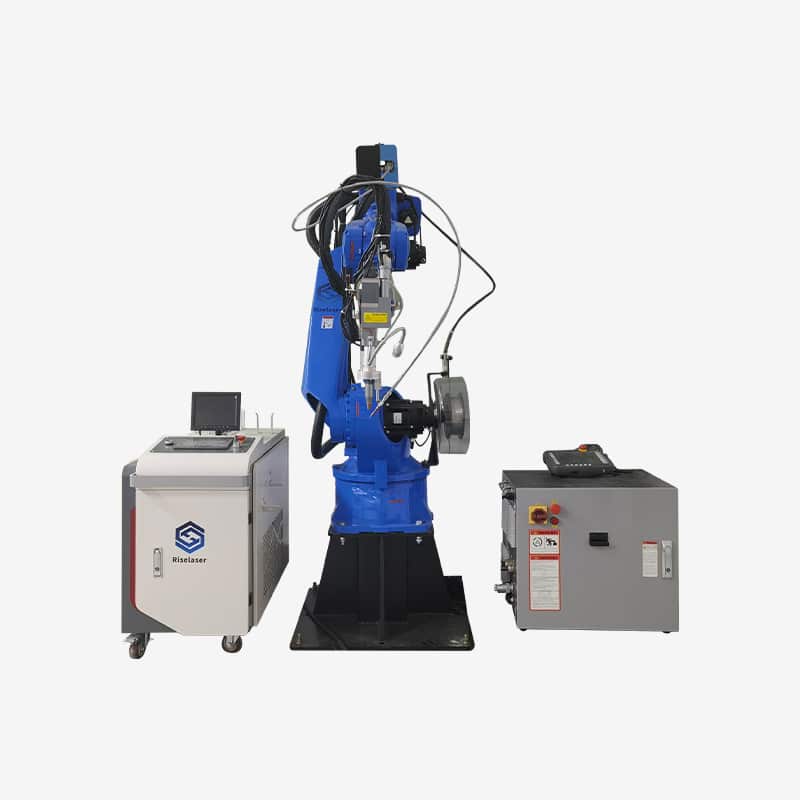
Robotic laser welding consists of several parts. The entire system is carefully designed to achieve a perfect weld every time.
Laser Source
The laser emits a powerful beam of light used for welding. Most companies use fiber lasers because they work better and require less maintenance. The laser beam is strong enough to melt metal in less than a second.
Beam Delivery Systems
Special fiber optic cables transmit the laser beam to where it is needed. These fiber optic cables are like a supercharged version of Internet cables. These cables ensure that the laser energy is not wasted.
Robotic Arms
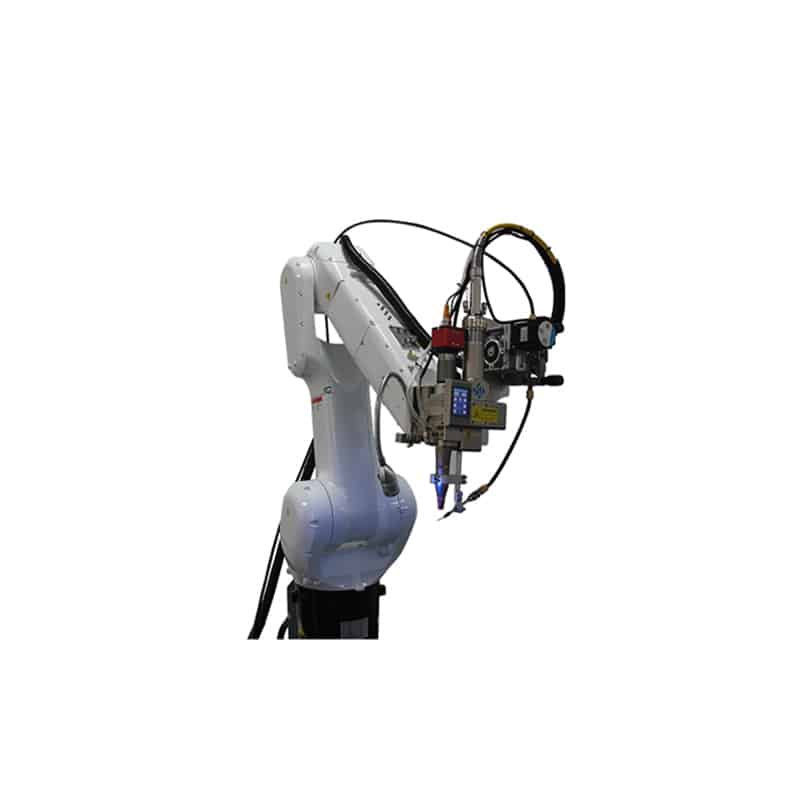
A movable robot arm holds the welding tool. This robotic arm can bend and twist in multiple directions to reach difficult spots. Special motors help the robotic arm to move exactly where it is needed.
Welding Head
The welding head focuses the laser beam like a magnifying glass. It can adjust the laser for different types of welding. The welding head contains special lenses that direct the laser to the desired position.
Control System
A computerized brain controls the entire welding process. The system watches everything that happens and makes quick adjustments when needed. Modern welding robots can even learn from experience and make better welds.
Safety Features
Laser welding is dangerous, so safety is very important. The robot works behind a protective shield to ensure everyone’s safety. Special cameras monitor the welding process to make sure nothing goes wrong.

Advantages of Robotic Laser Welding
Welding with robots using lasers is better than old-fashioned welding in many ways. These special robots have changed the way many companies make products.
Flexibility
Robot arms can reach hard-to-reach places. These clever machines can twist and turn to weld almost any shape, no matter how big or oddly shaped it is. Traditional welding tools often can’t handle these tricky jobs. Robots can handle a variety of parts that are difficult for humans to handle.
Precision and Automation
Robots make perfect welds every time. These amazing machines work faster than humans and never get tired or make mistakes. The laser beam hits exactly where it needs to go. When robots do the welding, companies can produce more products in less time.
Space Efficiency
Robotic welding systems don’t take up much space. These compact machines can be easily installed into existing factories, which helps companies save on building costs. Traditional welding equipment requires a lot of space to work. Robots can help companies produce more products without having to build larger buildings.
Energy and Cost Efficiency
Robotic laser welders waste very little material. The precise laser beam helps companies save money on expensive metals and other materials used to make products. Laser welding uses less electricity than other types of welding. This means that companies spend less on energy bills.
Safety
Robots keep workers safe while welding. These smart machines have special features that shut them down if anything goes wrong. People working near the robots don’t have to worry about getting hurt. The machines handle all the dangerous work.
Cost Benefits of Robotic Laser Welding
Using robotic welders helps companies save money in several ways. Let’s see how these savings add up over time.
Increased Productivity
Robots can weld things very quickly. These tireless workers can produce more products in a day than traditional welding methods. Robots work at the same pace throughout the day. Companies can fulfill more orders and make more profit.
Reduced Labor Costs
With robots, companies don’t need to hire as many welders. These machines can do the work of several people at once. Robots rarely make mistakes. This means that companies spend less money to fix problems.
Material Cost Savings
Robotic welders are very careful with materials. These sophisticated machines use a precise amount of metal with each weld. Companies waste less expensive materials. In the long run, the material savings can be huge.
Long-term savings
Robotic welding systems have a long service life and do not break down. These reliable machines do not require much repair or maintenance. The money the company spends on the robot is well worth it. The savings add up year after year.
The Future of Robotic Laser Welding
Robotic laser welding is getting better as new developments shape the future of what’s to come. These changes will change the way we make things in just a few years.
Getting Smarter
Robots will use artificial intelligence to make better welding decisions. Future welding machines will figure out the best settings on their own, detect problems before they happen, and get more done in less time with fewer errors.
New Building Blocks
Companies want their machines to be more flexible. As a result, future welding robots will feature parts that can be easily replaced or upgraded when needed, like building blocks that can be snapped together.
Eco-Friendly Welding
Going green is becoming more and more important. The next wave of robotic welding systems will use less electricity and less material waste, which helps protect our environment and saves money.
Expanding into New Industries
Robotic laser welding was once too expensive for many companies. As prices drop and technology advances, more types of businesses will start using these welding robots in their factories.
Summary
Laser robotic welding has changed the way we make things. These robots can weld with amazing precision and speed while keeping costs down, which is why automakers, aircraft manufacturers, and medical companies love using them. As technology advances, robotic welding will become smarter, greener, and more applicable to a variety of manufacturing jobs.