
In traditional material processing applications using long pulse lasers (microseconds, nanoseconds, etc.), the main interaction between laser and material is to convert laser energy into thermal effects to melt and vaporize the material, thereby achieving material removal. However, in this process, due to the accumulation of heat, a large and strong heat-affected zone (HAZ) will be formed. In precision machining applications, this heat-affected zone will cause adverse effects such as overheating and deformation, edge melting, oxidation and blackening, residue, and burrs in the material processing area, resulting in unacceptable functional or appearance damage, which will not only reduce product quality and yield, but also usually require cumbersome subsequent cleaning steps to eliminate adverse effects, which will undoubtedly greatly increase production costs.
With the continuous development of laser technology and people’s higher pursuit of processing quality, ultrafast laser processing technology has emerged. Generally, ultrafast laser refers to a laser with a pulse width of less than 10ps. Among them, femtosecond laser, as an ultrafast laser with a shorter pulse width, has also been gradually used in laser processing.
| What is a femtosecond laser
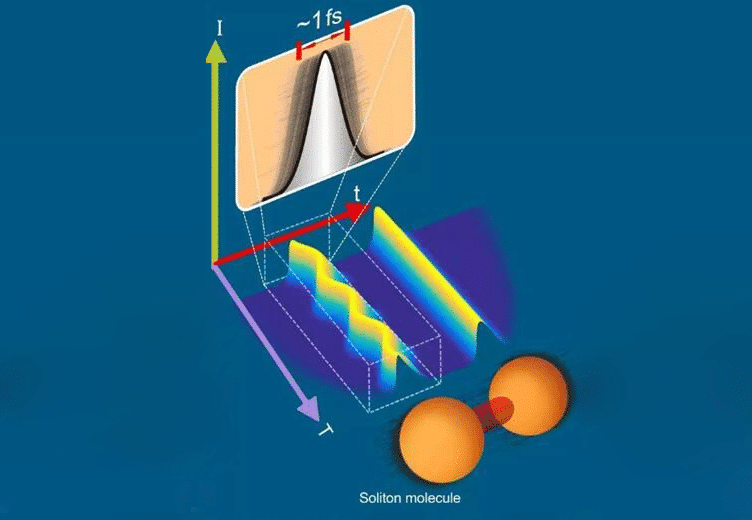
Femtosecond laser refers to a laser technology that produces extremely short pulses. Femtosecond (fs) is a unit of time, and 1 femtosecond is one quadrillionth of a second. Femtosecond laser, as the name suggests, is a pulsed laser emitted within the femtosecond time scale. The pulse duration of a femtosecond laser can reach a few femtoseconds to hundreds of femtoseconds, making it one of the shortest laser pulses available under current experimental conditions. As a powerful tool for extreme manufacturing of ultrafast lasers, femtosecond lasers are the shortest laser pulses that can be stably obtained and used in industrial applications.
| Advantages of femtosecond lasers
Compared with common nanosecond and picosecond lasers, the characteristics of femtosecond lasers are mainly the following three points:
● Femtosecond laser pulses have an ultra-short pulse duration (pulse width), usually in the order of 10-15s. Even light can only propagate a distance of 0.3μm within 1fs;
● Femtosecond laser pulses have ultra-high peak power, which can easily achieve 1012 W, which is far more than the total power of the global power grid;
● After focusing, femtosecond laser pulses can form a micron-scale focal spot. The peak energy density in the center of the spot can reach 1020-1022 W/cm2, which can excite extremely strong local electromagnetic fields. The intensity of this local electromagnetic field is several times higher than the Coulomb force of the nucleus on the surrounding electrons. It can directly destroy the chemical bonds between atoms in the material and instantly excite the electrons inside the material to ionize, causing the positively charged particles in the material to erupt outward in the form of plasma due to the strong Coulomb repulsion, thereby achieving material removal.
| Femtosecond laser + extreme smart manufacturing
The ultra-short pulse duration and ultra-high peak power of femtosecond laser provide unprecedented extreme physical conditions for scientific experimental research, such as high time resolution, high electric and magnetic field strength, high pressure and hot air. At the same time, it also provides effective processing tools for current extreme manufacturing.
The ultra-short pulse width and ultra-high peak power of femtosecond laser can induce nonlinear absorption effect in materials, obtain focal spot with a size far smaller than the diffraction limit, and thus greatly improve the spatial resolution of processing. In addition, since the pulse duration of femtosecond laser is much smaller than the thermal relaxation time. Therefore, no heat is generated during femtosecond laser processing, commonly known as “cold” processing. Femtosecond laser can be used to perform ultra-fine cutting, drilling, etching and other processing on any material, which can directly avoid the phenomenon of overheating cracking, oxidation, melting and other phenomena caused by heat accumulation in conventional long-pulse laser processing. This means that there is almost no carbonization, slag, debris and other phenomena that affect the processing quality of products during femtosecond laser processing. The subsequent product cleaning steps can be simplified or even directly omitted, which will undoubtedly greatly reduce the processing cost and shorten the product production cycle.
The pulse repetition frequency of femtosecond lasers can reach up to megahertz (MHz) or even gigahertz (GHz). This high repetition frequency means that millions or even billions of laser pulses can be generated per second, greatly increasing the processing rate. This is particularly important for industrial applications because it can significantly reduce processing time and improve productivity while maintaining the high precision and quality of femtosecond laser processing.
| Application of femtosecond lasers
The many excellent properties of femtosecond laser ultra-fine processing technology make it an irreplaceable processing tool in the field of extreme manufacturing, and it is widely used in semiconductor microelectronics manufacturing, biomedical equipment, aerospace, optical component manufacturing and other fields, providing important support and solutions for the development of modern science and technology.
Specifically, the processing accuracy of femtosecond lasers can reach submicron level (less than 1 micron), and when processing metals, semiconductors and composite materials, extremely high edge quality and fine structures can be achieved. For example, in the field of microelectronics and semiconductors, femtosecond lasers can accurately cut and drill holes to produce microholes with a diameter of less than 10 microns, and the edges are smooth and burr-free. This makes it particularly suitable for manufacturing complex microstructures and nanostructures, such as integrated circuits, microelectromechanical systems (MEMS) and functional metasurfaces.
During femtosecond laser processing, an extremely weak to negligible heat-affected zone (HAZ) can be achieved, and high-precision processing can be achieved without damaging surrounding materials. It is particularly suitable for processing heat-sensitive materials such as polymers, glass and biomaterials.
Femtosecond laser equipment also performs well in the manufacture of functional supersurfaces. For example, femtosecond lasers are used to process nano- to micron-periodic surface microstructures on the surface of materials, giving the materials some special functions, and the function switching can be achieved by adjusting the morphology of the surface microstructures, such as anti-reflection, super-hydrophobic self-cleaning, super-hydrophilic self-infiltration, antibacterial and antiviral, and surface color. In addition, nano-scale microstructures can be processed on the surface of materials by femtosecond lasers to significantly increase the surface area of the material surface and significantly improve the surface performance of the material, such as rapid heat dissipation, cell adhesion, and cell proliferation.
In the medical field, femtosecond laser equipment is widely used in the manufacture of high-precision biosensors and microfluidic chips due to its extremely high processing accuracy and extremely low thermal impact. This equipment can perform fine processing without damaging the material, ensuring the integrity and functionality of the biomaterial.
In integrated circuit manufacturing, tiny circuit patterns are formed by precision cutting and drilling. In addition, femtosecond lasers also play a key role in microelectromechanical systems (MEMS) manufacturing, and can accurately process tiny mechanical and electronic components.
In industrial manufacturing, such as aerospace and automobile manufacturing, high-precision and complex parts can be manufactured through precision cutting and processing, and its high efficiency and high-quality processing capabilities meet the strict requirements of modern industrial manufacturing.
The company has gathered outstanding talents in the industry, and the core technical team has more than 10 years of experience in the field of femtosecond laser. The company’s R&D technicians account for more than 60% of the total number of employees, and those with doctoral degrees account for more than 10%. At the same time, the company has efficient customization capabilities and agile service capabilities, and can provide customers with efficient and reliable solutions.