
The Core of “New” Laser Technology
Technological Innovation: A Driving Force
Technological innovation is essential for developing new quality productivity. Laser technology is often described as “the fastest knife, the most accurate ruler, and the brightest light.” Its exceptional characteristics—monochromaticity, directionality, and brightness—make it indispensable in modern industrial manufacturing.
New quality production signifies a departure from traditional expansion models that rely heavily on labor and material investments. Instead, it emphasizes high added value and low environmental impact, marking an inevitable shift towards intelligent manufacturing.
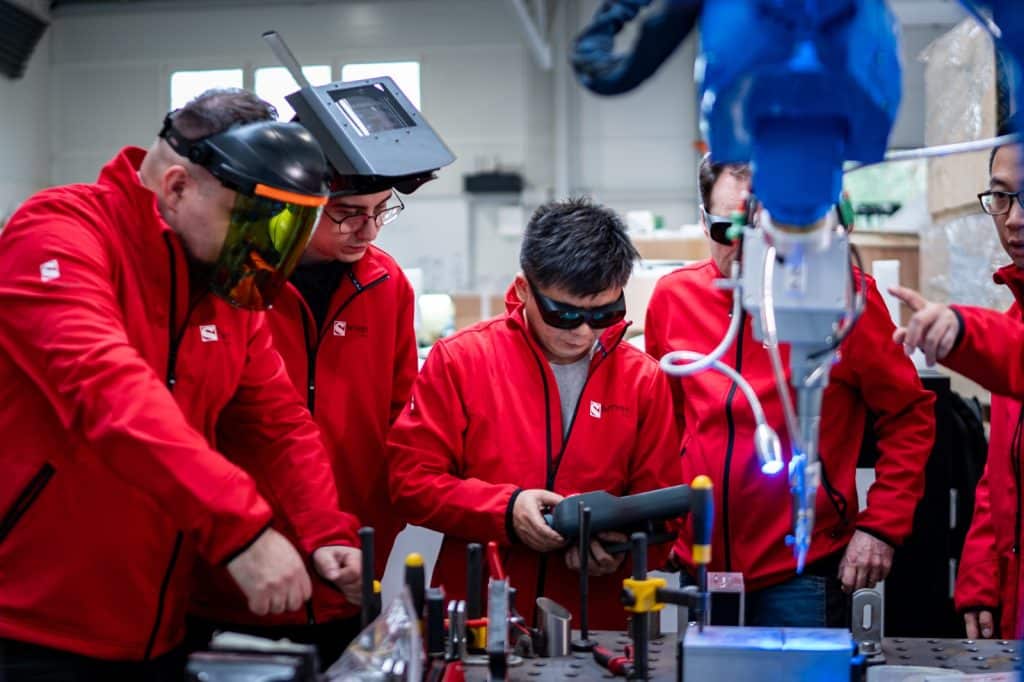
Unlocking New Quality Productivity
To achieve new quality productivity, the laser industry must prioritize deep innovation at the technical level. This includes:
- Replacing Traditional Tools: Transitioning to more efficient laser equipment to transform production methods.
- Exploring Advanced Technologies: Investigating higher power and shorter wavelength lasers to enhance beam quality and stability, meeting the demands for higher standards in production.
Moreover, the integration of laser technology with other advanced technologies, such as artificial intelligence, is crucial. AI can facilitate intelligent control and optimization of the laser processing process. In laser cutting and welding, this integration enables:
- Intelligent Process Control: Utilizing vision, sensing, and image processing for optimized welding.
- Real-time Parameter Adjustment: Using big data algorithms to automatically optimize laser power and scanning speed based on material and process requirements.
Continuous innovation in high-tech laser technology is essential for reducing manual intervention, lowering costs, and increasing efficiency, thereby promoting progress and upgrading in the laser industry.
“New” Talent Training: A Key Element
The development of new quality productivity hinges on high-quality professional talent. The laser industry demands rigorous qualifications due to its interdisciplinary nature, covering optics, electronics, and physics. As technology advances and application fields expand, the need for diverse, specialized talent becomes critical.
Strategies for Talent Development
- Collaboration Between Universities and Enterprises: Universities should provide a solid theoretical foundation while enterprises offer practical experience. Regular training and partnerships can enhance technological innovation.
- Role of Industry Associations: These organizations should facilitate exchanges and collaborations among universities, enterprises, and research institutes to nurture talent.
“New” Market Expansion: A Driving Force
Laser technology plays a pivotal role in intelligent manufacturing. Compared to other methods, laser processing offers significant advantages in controllability, efficiency, material conservation, quality, and environmental sustainability. This aligns with major trends in advanced manufacturing.
Expanding Application Areas
The laser industry should:
- Explore New Markets: While traditional applications are mature, there is room for optimization and upgrading. Identifying new segments can drive development.
- Integrate with Emerging Industries: Collaborating with strategic sectors such as new energy and advanced manufacturing can accelerate industry growth.
“New” Business Formats: A Guarantee
To optimize industrial structure, the laser industry must innovate not just in technology but also in development thinking. This includes:
- Collaborative Partnerships: Establishing strong relationships between upstream material and device suppliers, midstream equipment manufacturers, and downstream application enterprises.
Key Collaborative Actions
- Upstream Suppliers: Focus on enhancing the quality and stability of laser materials and devices.
- Midstream Manufacturers: Provide customized solutions based on downstream needs and collaborate on technology development.
- Downstream Enterprises: Offer timely feedback on equipment usage to inform midstream and upstream partners, promoting optimization of the entire industrial chain.

Conclusion
The laser industry is advancing “quality” through “newness,” closely aligning with the evolving demands of modern manufacturing. By fostering high technology, efficiency, and quality, the industry aims to enhance its role in future economic development.