What is laser marking?
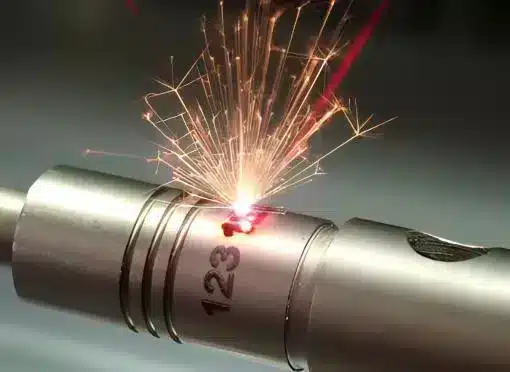
Laser marking technology is a non-contact method that uses laser technology to create permanent laser marks on various materials. By harnessing the power of high-energy laser beams, laser marking machines can be used as laser cutters and laser etching machines to effectively change the surface properties of various materials without causing any damage.This innovative production process enables precise and complex designs, ideal for creating QR codes, serial numbers, Data Matrix codes, and other markings. Depending on the specific application, different types of lasers are used. For example, fiber lasers are often used for marking metals, while carbon dioxide lasers are better suited for organic materials.
Laser marking applications
Automotive Industry: Laser marking systems offer many advantages and are widely used in the automotive industry for engraving on surfaces. Dot matrix systems are also used in this industry for various purposes. It is commonly used for parts identification, allowing components to be easily tracked and identified.
Laser marking of traceability codes and serial numbers using surface marking techniques such as engraving and dot-pin marking on engine parts to ensure accurate records, quality control, and enhanced traceability.
Electronics Industry: Laser marking is an important process in the electronics industry and is used to mark identification codes, logos, and other important information on metal parts. The technology enhances brand recognition and ensures product authenticity, making it a valuable branding tool.
Jewelry industry: Laser marking is used in the jewelry industry to put identification marks, logos, or personalized engravings on precious metals and gemstones. This increases the value of the jewelry and aids in identification.
Packaging industry: Laser marking is used to mark batch numbers, expiration dates, barcodes, and other information on the surface of metal packaging materials. This facilitates efficient inventory management and product traceability.
By adopting laser marking as part of your manufacturing or product identification process, you not only benefit from its accuracy, but you can also save significant costs in the long run.
Types of laser marking machines
There are many types of laser marking machines or systems available, each with its capabilities and applications.
Fiber laser marking machine: A fiber laser marking machine uses a fiber laser source to generate a laser beam. Known for their high beam quality, they enable precise, detailed marking on a variety of materials including metals, plastics, ceramics, and more. Fiber laser marking is widely used in automobiles, electronics, medical equipment, jewelry, and other industries.
CO2 laser marking machine: CO2 laser marking machine uses a carbon dioxide gas laser source to generate a laser beam. They are particularly suitable for marking organic materials such as wood, paper, leather, glass and some plastics. CO2 laser marking machines are commonly used in industries such as packaging, signage and engraving.
UV laser marking machine: UV laser marking machine uses an ultraviolet laser source to generate a laser beam. They are primarily used for marking or engraving materials that are highly sensitive to heat, such as plastic, glass, or certain metals. UV laser marking machines are commonly used in the electronics, medical and semiconductor industries.
Laser Marking vs. Printing: Advantages and Costs Comparison
Compared with traditional printing methods, laser marking has many advantages and can save companies a lot of costs. Let’s explore the advantages of laser marking and how it compares to printing:
No additional consumables required: Unlike printing methods, laser marking does not require the use of ink or solvents. This eliminates the need to regularly purchase and replenish laser marking machines and laser engraving supplies.
Enhanced durability: Compared to printed labels or codes, laser marking is highly resistant to abrasion, fading, and staining. This durability ensures important information remains legible over a longer period of time, reducing the need for relabeling or relabeling.
Reduce inventory costs: With laser marking, there is no need to rely on pre-printed labels or packaging materials. Instead, products can be marked directly during the manufacturing process using a laser marking machine. This laser process is also called laser engraving. This saves costs by eliminating the need to maintain large inventories of pre-printed items.
Improve efficiency: Laser marking is fast and precise, making it more efficient than traditional printing methods. The precision of laser technology allows for high-quality marking with faster cycle times.