
Are you searching for a welding solution that offers unmatched precision and efficiency? Have you considered how advanced light-based fusion technology could transform your manufacturing processes?
In today’s competitive industrial landscape, high-precision beam welding has emerged as a game-changing technology. From tiny jewelry repairs to massive automotive production lines, modern laser welders are revolutionizing how materials are joined across countless industries.
This comprehensive guide explores everything you need to know about advanced laser welding machines, their capabilities, their applications, and how to choose the right system for your specific needs.
What is Laser Beam Welding?
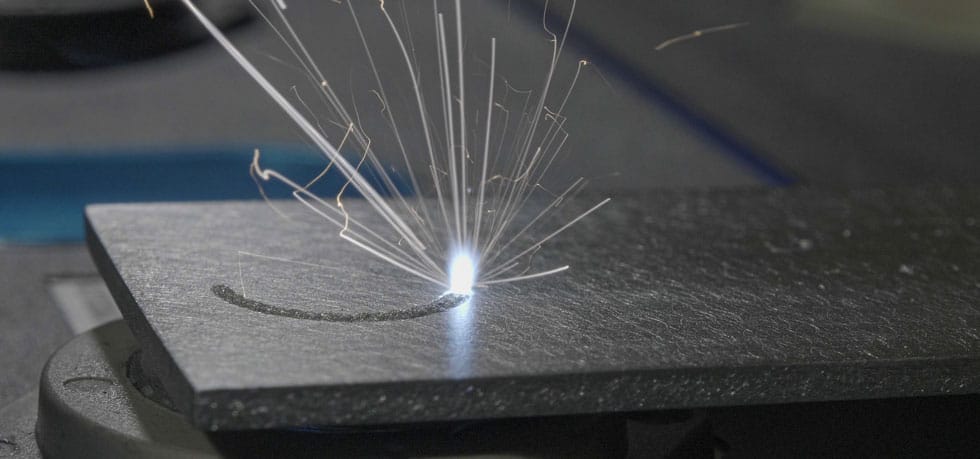
Laser beam welding is a fusion welding process that uses a concentrated beam of coherent light to join metal components. Unlike conventional welding methods that rely on electric arcs or gas flames, this technology uses highly focused photon energy to create precise, controlled heat at the joining interface.
When the concentrated light from a laser welder hits the workpiece, it rapidly heats the material to its melting point, creating a fusion zone that solidifies into an extremely strong bond. This process happens with minimal heat affecting the surrounding area, making it ideal for delicate or heat-sensitive applications.
The core advantages of this advanced joining method include:
- Extremely focused heat input
- Deep penetration capabilities
- Minimal heat-affected zones
- High-quality, aesthetically pleasing welds
- Ability to join dissimilar materials
- Compatibility with automated production systems
How Does a Laser Welder Machine Work?
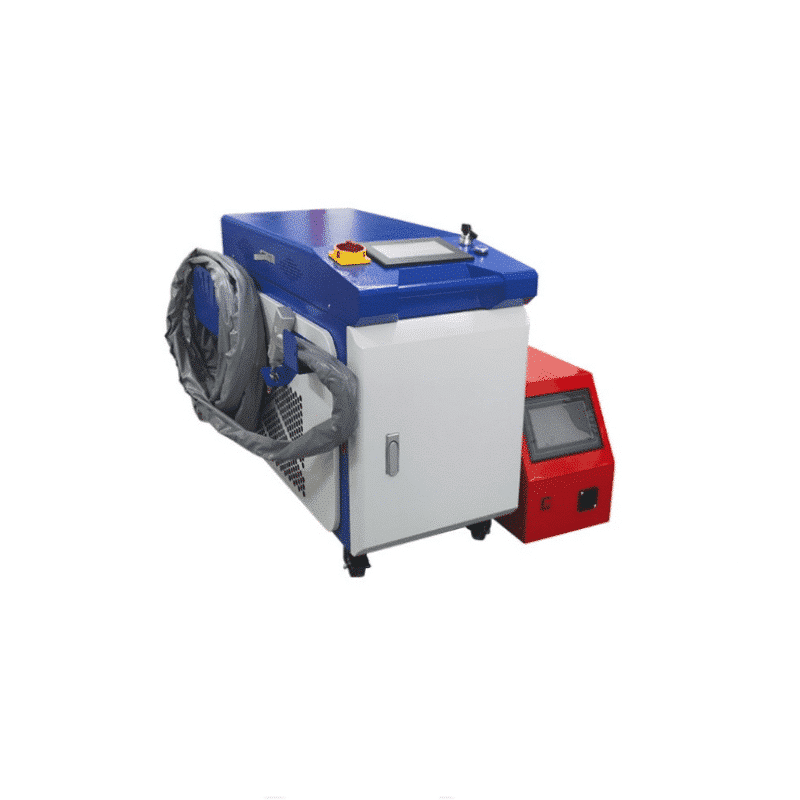
A typical laser welder machine consists of several key components working together to deliver precise, controlled energy to the workpiece. At its core, every advanced welding system includes:
- A laser generator (the source of coherent light)
- A beam delivery system (typically fiber optics or mirrors)
- Focusing optics that concentrate the beam
- Motion systems to position the workpiece or beam
- Shielding gas delivery to protect the weld from oxidation
- Cooling systems to maintain optimal operating temperatures
- Control systems to manage the welding parameters
When operating a laser welder, the energy density at the focal point can reach several megawatts per square centimeter, creating temperatures that rapidly melt most metals. Modern beam welding equipment allows operators to control parameters precisely, such as power, pulse duration, spot size, and travel speed, enabling unprecedented control over the joining process.
Types of Laser Welding Techniques
Heat Conduction Welding in Handheld Laser Welding
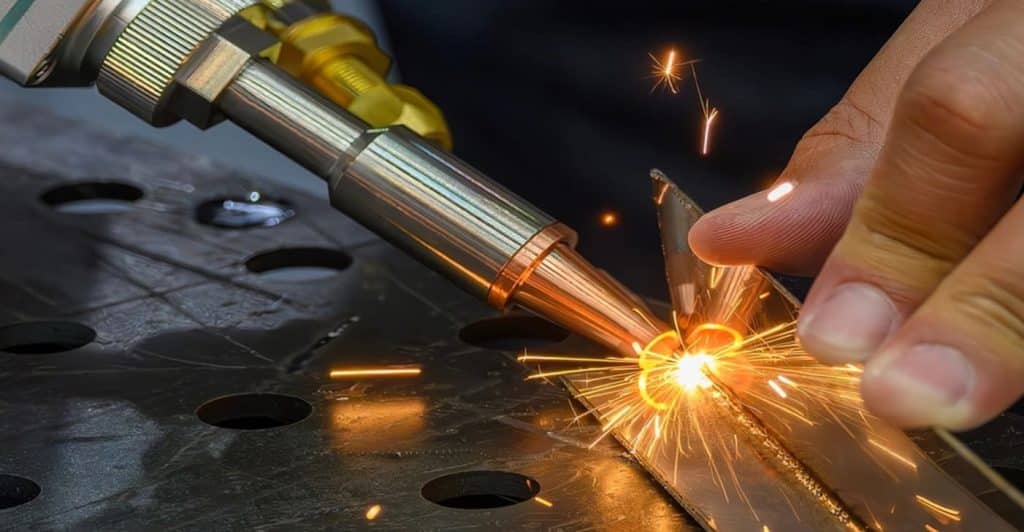
Handheld laser welding often utilizes the heat conduction welding technique, where the beam energy heats the surface of the material, and this heat conducts downward to create the weld. This method is particularly effective with portable systems because:
- It requires lower power density
- Creates smooth, aesthetically pleasing welds
- Minimizes the risk of material vaporization
- Works well for thin materials commonly joined with portable laser welders
The growing popularity of these handheld tools has made this precision technology accessible to smaller workshops and repair operations where flexibility is crucial.
Keyhole Welding with a Fiber Laser Welding Machine
When deeper penetration is required, keyhole welding becomes the preferred technique, particularly with high-power fiber laser welding machines. This method occurs when:
- The power density exceeds 1 MW/cm²
- Material at the focal point vaporizes, creating a “keyhole”
- Surrounding molten material flows around the keyhole
- The keyhole advances through the joint, creating a deep, narrow weld
Fiber laser welding excels at keyhole welding due to its excellent beam quality and high power density. Modern fiber-based systems can achieve exceptional depth-to-width ratios, making them ideal for applications requiring deep penetration with minimal heat input.
Advantages of Using a Laser Welding Machine
High Precision and Repeatability with a Jewelry Laser Welder
The jewelry industry has widely adopted jewelry laser welders due to their unmatched precision. These specialized machines offer:
- Spot sizes as small as 0.1mm
- Pulse control down to milliseconds
- Microscope viewing systems for perfect alignment
- Programmable patterns for consistent results
For jewelers, a specialized beam welding system represents an investment that pays dividends in reduced scrap, improved quality, and the ability to work with precious metals that traditional methods might damage.
Faster Processing with a Portable Laser Welder
The advent of portable laser welders has brought significant speed advantages to field operations. These units offer:
- Rapid setup and deployment
- No need for consumable electrodes
- Instant on/off capability
- Minimal post-weld cleanup
Portable beam welding units have transformed industries where on-site repairs previously required cumbersome equipment or compromised quality.
Low Heat Input and Minimal Distortion in Laser Welding Aluminum
Laser welding aluminum has traditionally been challenging due to the material’s high reflectivity and thermal conductivity. However, modern systems have overcome these obstacles, offering:
- Minimal heat-affected zones
- Virtually no distortion
- Clean, oxide-free welds
- Ability to join thin aluminum components
The advantages of advanced aluminum joining technology have made it the preferred method for aerospace, automotive, and electronics applications where aluminum’s light weight is crucial.
Low Maintenance and Laser Welder Cost Efficiency
While the initial laser welder cost may be higher than traditional welding equipment, the long-term economics strongly favor beam technology:
- No consumable electrodes
- Lower energy consumption per weld
- Reduced scrap rates
- Minimal post-weld processing
- Less downtime for maintenance
When calculating the true cost of ownership, manufacturers must consider these operational savings that accrue over the equipment’s lifetime.
Easily Automated Fiber Laser Welding for High-Volume Production
Fiber-based technology lends itself perfectly to automation, with benefits including:
- Easy integration with robotic systems
- Consistent quality over long production runs
- Reduced labor costs
- Higher throughput rates
- Enhanced worker safety
Many manufacturers have discovered that integrating fiber-based beam technology into their automated production lines delivers ROI much faster than initially projected.
Applications of Laser Welding in Various Industries
Automotive Industry and Fiber Laser Welding Machines
The automotive sector has embraced fiber laser welding machines for numerous applications:
- Tailored blanks for body panels
- Battery enclosures for electric vehicles
- Transmission components
- Sensors and electronics housings
- Airbag initiators
The ability of advanced fiber-based joining to connect dissimilar materials and create lightweight structures has been particularly valuable as automakers strive to reduce vehicle weight while maintaining safety.
Aerospace Manufacturing with Advanced Laser Beam Welding
Aerospace manufacturers rely on the precision of light-based fusion for critical components:
- Engine components
- Fuel system parts
- Structural elements
- Sensor housings
- Turbine assemblies
The aerospace industry’s strict quality requirements make precision beam technology particularly attractive due to its consistency and traceability.
Medical Device Production with a Small Laser Welding Machine
The medical industry often utilizes small laser welding machine systems for their ability to create hermetic seals and work with biocompatible materials:
- Pacemaker enclosures
- Surgical instruments
- Implantable devices
- Diagnostic equipment
- Drug delivery systems
The investment in compact beam welding equipment is easily justified when considering the high-value nature of medical devices and the stringent regulatory requirements they must meet.
Electronics Industry and Handheld Laser Welder Applications
Handheld laser welder tools have found numerous applications in electronics manufacturing:
- Battery connections
- Sensor attachments
- Circuit board repairs
- Connector assembly
- Microelectronic packaging
The precision of handheld beam joining makes it ideal for delicate electronic components where traditional soldering might cause thermal damage.
Steel Construction & Shipbuilding with a Laser Welder Machine
Even heavy industries have adopted advanced beam welding technology for specific applications:
- Pipe joining
- Structural steel connections
- Shipyard fabrication
- Heavy equipment manufacturing
- Pressure vessel construction
The speed and quality advantages of these systems become particularly significant when dealing with the large volumes of welding required in these industries.
Choosing the Right Laser Welding Machine for Your Needs
Key Factors Affecting Laser Welding Machine Price
The laser welding machine price varies significantly based on several factors:
- Power output
- Beam quality and focusing capabilities
- Automation features
- Work envelope size
- Control system sophistication
- Brand reputation and support
Understanding these factors helps buyers make informed decisions about which features truly matter for their specific applications.
Fiber Laser Welding vs. Electron Beam Welding
When comparing fiber laser welding to electron beam welding, several important distinctions emerge:
- Electron beam systems require a vacuum chamber
- Fiber-based technology works in atmospheric conditions
- Electron beam typically achieves deeper penetration
- Fiber systems offer more flexibility in production environments
- Electron beam generally has higher equipment costs
For many applications, fiber-based beam technology provides an optimal balance of performance and practicality compared to electron beam systems.
The Role of Shielding Gases in Laser Welding
Proper shielding is crucial in laser welding applications, with different gases offering various benefits:
- Argon for most standard applications
- Helium for deeper penetration and faster speeds
- Nitrogen for specific stainless steel applications
- Specialized mixtures for challenging materials
The choice of shielding gas can significantly impact the quality and characteristics of beam joining results.
The Future of Portable Laser Welders and Industry Innovations
The technology behind portable beam welders continues to evolve rapidly, with upcoming innovations including:
- Increased power in smaller packages
- Better battery technology for true cordless operation
- Advanced adaptive control systems
- Integration with augmented reality for guided operation
- Artificial intelligence for weld quality monitoring
These advancements will further expand the applications for portable joining systems across industries.
Finding the Best Laser Welding Machine for Your Business
When researching the best system for your specific needs, consider these key steps:
- Thoroughly analyze your welding requirements
- Consult with multiple vendors and request demonstrations
- Speak with current users of the equipment
- Consider future production needs, not just current requirements
- Evaluate the total cost of ownership, not just the initial purchase price
- Assess available training and support
The right beam welding equipment represents a significant competitive advantage when chosen carefully.
Conclusion
Advanced photonic joining technology has transformed manufacturing across virtually every industry, offering unprecedented precision, speed, and quality. From delicate jewelry repairs with a specialized jewelry laser welder to high-volume automotive production with automated fiber-based systems, this technology continues to expand its applications.
While the initial investment may seem significant, the operational benefits and quality improvements typically deliver a rapid return on investment. As the technology continues to advance, beam welding systems will become even more accessible, with innovations bringing this precision technology to smaller operations.
Whether you’re considering a compact system for specialized applications or a comprehensive joining solution for high-volume production, understanding the fundamentals outlined in this guide will help you make informed decisions about implementing this transformative technology.
FAQ
Is laser welding as strong as MIG?
Yes, beam fusion processes can produce bonds as strong or stronger than MIG welding, with less metal weakening around the weld.
Does laser welding actually work?
Absolutely. This technology is well-established across automotive, aerospace, medical, and electronics industries, consistently delivering high-quality results.
What is laser welding process?
It involves focusing a high-energy beam onto the joint between materials, melting them to create a strong bond with precisely controlled parameters.
Is laser welding better than TIG?
It offers faster speeds, less heat input, and better automation potential, though TIG remains more cost-effective for certain applications. The best choice depends on your specific requirements.