
The manufacturing landscape is undergoing a radical shift as automation becomes more accessible and necessary than ever. At the forefront of this transformation is robotic laser welding, a technology that combines the precision of fiber laser beams with the tireless accuracy of industrial robots. For metal fabricators, automotive giants, and OEM manufacturers, understanding the nuances of this technology is no longer optional—it is a competitive requirement. This article covers everything from the fundamental mechanics of how robotic systems operate to the critical decision-making factors that determine when to automate your welding line. Whether you are scaling production or looking to solve labor shortages, this tutorial will guide you through the complexities of integrating robotic laser welding into your facility.
What Is Robotic Laser Welding?
Robotic laser welding is a sophisticated automation process where a high-power laser beam is guided by a multi-axis robot arm to join metal components. Unlike traditional arc welding or manual laser welding, this system is entirely controlled by software, allowing for micron-level precision and repeatable quality across thousands of cycles. The process uses a concentrated light source—typically a fiber laser—to create a deep, narrow weld with minimal heat-affected zones (HAZ). This means that parts are less likely to warp, and the resulting joint is often stronger and cleaner than those produced by conventional methods.
The system consists of several integrated components that must work in perfect synchronization:
- Fiber Laser Source: The heart of the system, converting electrical energy into a high-density beam of light.
- Robot Arm (Typically 6-Axis): The mechanical manipulator that provides the reach and flexibility needed to access complex geometries.
- Laser Welding Head: The tool at the end of the robot arm that focuses the laser beam and often includes shielding gas nozzles.
- Vision and Seam Tracking System: The “eyes” of the robot, which use cameras or lasers to detect the exact position of the joint in real-time.
- Safety Enclosure: A Class 4 laser-safe housing that protects operators from reflected laser light and fumes.
By combining these elements, manufacturers can achieve welding speeds that are up to 10 times faster than manual processes while maintaining a level of consistency that human operators simply cannot match.
How Robotic Laser Welding Works — Step by Step
Understanding the operational flow of a robotic laser welding cell is crucial for planning your production floor. Here is the step-by-step process of a typical welding cycle:
- Workpiece Fixture and Loading: The process begins with placing the metal parts into a custom fixture. These fixtures must be highly precise to ensure the parts are in the exact position the robot expects.
- Robot Path Programming: The robot follows a pre-defined path. This can be programmed through “teaching” (moving the robot manually) or, more commonly in modern shops, through offline programming (OLP) software using CAD models.
- Seam Detection and Vision System: Before firing the laser, the robot often uses a vision system to “find” the weld seam. This accounts for small variations in part placement or manufacturing tolerances.
- Laser Firing and Parameter Control: Once the path is verified, the laser fires. The controller manages power levels, focal point, and travel speed simultaneously to create a perfect weld bead.
- Post-Weld Inspection: Integrated sensors can monitor the weld quality in real-time, checking for depth, width, and any potential defects like porosity.
- Unloading: After the cycle is complete, the robot returns to its home position, and the finished part is unloaded—either manually or by another robot—to make room for the next workpiece.
Key Components of a Robotic Laser Welding System
To invest in the right system, you must understand the specifications of each core component. Use the table below as a checklist for your technical evaluation.
| Component | Function | Key Specs to Check |
|---|---|---|
| Fiber Laser Source | Generates the high-energy beam for welding. | Power (kW), Beam Quality (BPP), Stability. |
| 6-Axis Robot Arm | Moves the welding head with high precision. | Reach (mm), Payload (kg), Repeatability. |
| Laser Welding Head | Focuses the beam and delivers shielding gas. | Focal length, Wobble capability, Internal cooling. |
| Seam Tracking System | Adjusts the robot path based on actual part position. | Sampling rate, Accuracy, Integration with robot controller. |
| Cooling System | Maintains optimal temperature for the laser and head. | Cooling capacity, Flow rate, Temperature stability. |
| Safety Enclosure | Protects the environment from laser radiation. | Interlock speed, Viewing window rating (OD level), Fume extraction. |
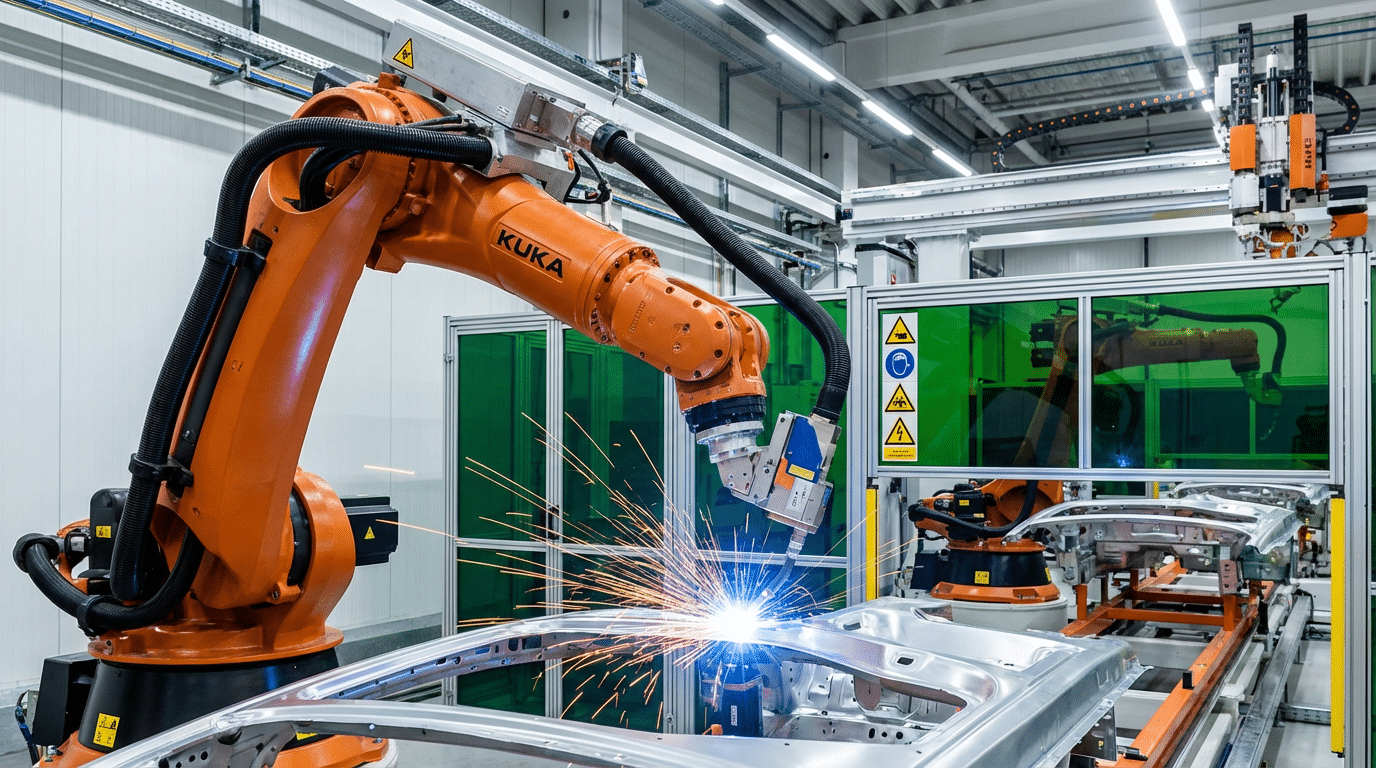
The synergy between the fiber laser source and the robot arm is what defines the system’s capability. For those just starting with laser technology, many facilities find that a handheld fiber laser welder is an excellent entry point before moving to full robotic automation.
Robotic vs Handheld Laser Welding — When to Use Which
While robotic systems offer the highest throughput, they are not always the right choice for every application. Many shops utilize a hybrid approach, using automation for high-volume parts and manual tools for custom work or repairs.
| Criteria | Robotic Laser Welding | Handheld Laser Welding |
|---|---|---|
| Production Volume | High (Thousands of identical parts) | Low to Medium (Custom or low volume) |
| Weld Consistency | Extremely High (Software-driven) | Moderate (Dependent on operator skill) |
| Setup Cost | High (Integration, fixtures, safety) | Low (Portable, lower barrier to entry) |
| Flexibility | Lower (Requires reprogramming for new parts) | Extremely High (Point and shoot) |
| Skill Required | Programming knowledge required | Basic welding technique (Easy to learn) |
| Best Applications | Automotive, Battery Packs, Large series | Sheet metal shops, HVAC, Repair work |
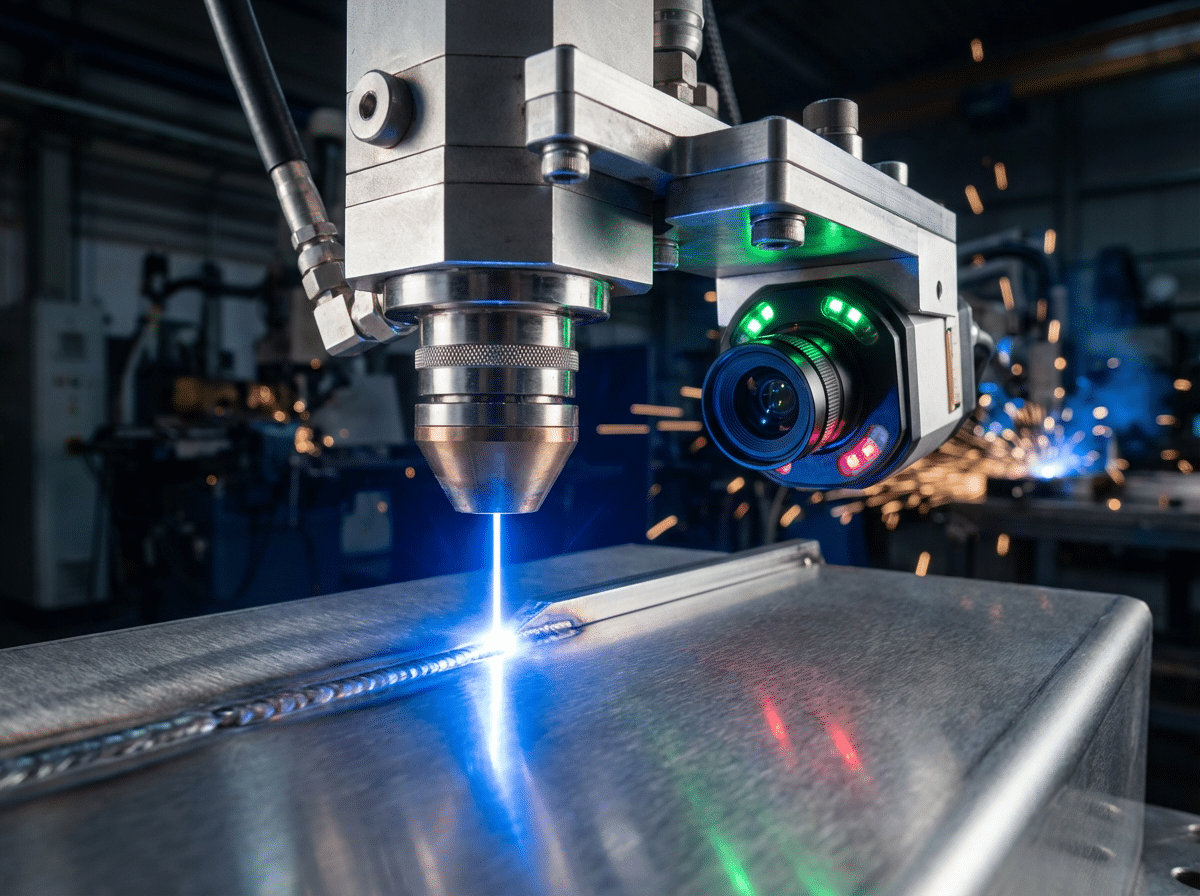
Choosing between these two depends largely on your ROI calculations. For example, if you are working with complex sheet metal assemblies, a 3-in-1 laser welding cleaning cutting machine might provide more versatility for a smaller shop than a dedicated robotic cell.
Top Industries Using Robotic Laser Welding
The adoption of robotic welding is accelerating across diverse sectors, driven by the need for lightweighting and increased structural integrity.
- Automotive: Used extensively for welding car body panels, pillars, and increasingly for EV battery packs where thermal management is critical.
- Shipbuilding: Robotic systems handle the long, straight welds on hull sections, significantly reducing the time spent on manual labor in harsh environments.
- Aerospace: High-precision welding of aluminum and titanium components for engines and airframes requires the consistency only a robot can provide.
- HVAC & Ductwork: Automated cells produce airtight seams on ducting and heat exchangers at speeds that manual welders cannot match.
- Pressure Vessels: Ensuring zero-defect welds in tanks and boilers is easier with automated parameter control and real-time monitoring.
- Kitchen Equipment: Stainless steel appliances require aesthetic, high-quality welds that need minimal post-processing, making robotic laser welding ideal.
In addition to welding, many of these industries also utilize a pulse laser cleaning machine to prep surfaces before welding or to clean the final bead for a perfect finish.
What to Look for When Buying a Robotic Laser Welding System
Purchasing a robotic welding cell is a significant capital investment. To ensure you get the best return, consider these six factors:
- Robot Brand and Payload: Ensure the robot has a reputable track record and a payload capacity that can handle the weight of the welding head and sensors without vibrating.
- Laser Source Power: Choose a power level (typically 1.5kW to 6kW) that matches your material thickness. Under-powering leads to poor penetration, while over-powering is an unnecessary expense.
- Seam Tracking Type: Do you need simple laser point tracking or a full vision-based system? High-precision parts often require the latter to ensure the beam stays on the joint.
- Offline Programming Software: Look for systems that allow you to program the robot on a computer while it is still working on the floor. This minimizes downtime between different part runs.
- Safety Compliance: Ensure the entire system meets local and international safety standards (CE/ISO). A Class 1 enclosure is non-negotiable for shared factory floors.
- After-Sales Support: Automation is complex. You need a supplier that offers training, remote troubleshooting, and a steady supply of consumables like protective lenses.
Many manufacturers also find it beneficial to integrate other laser tools into their workflow, such as a desktop fiber laser marking machine for part serialization and traceability.
Is Robotic Laser Welding Right for Your Production Line?
Before pulling the trigger on an order, you must self-qualify your production needs. Robotic laser welding is a powerful tool, but it is not a “magic bullet” for every problem.
Volume Threshold: As a rule of thumb, you should have at least 500 identical or very similar welds per shift to justify the setup and programming time of a robot. For lower volumes, the flexibility of manual tools is often superior.
ROI Timeline: A typical robotic laser welding system should pay for itself within 18 to 36 months through labor savings, reduced scrap, and increased throughput. If your product lifecycle is shorter than this, automation might be a risk.
Part Design: Robotic welding thrives on “design for manufacturing” (DFM). If your parts have huge gaps or highly inconsistent tolerances, the robot will struggle. Laser welding requires tight fit-up, often with gaps of less than 10% of the material thickness.
If you find that your production is still in the prototyping phase or involves highly complex, one-off geometries, sticking with a handheld unit or a manual station is likely the safer and more cost-effective route.
Conclusion
Robotic laser welding represents the pinnacle of modern metal fabrication. By combining the speed of fiber lasers with the precision of advanced robotics, manufacturers can achieve levels of productivity and quality that were previously impossible. While the initial investment is significant, the long-term benefits in consistency, safety, and throughput make it an essential upgrade for any high-volume production line. Whether you are in the automotive, aerospace, or general manufacturing sector, now is the time to evaluate how automation can transform your operations.
Ready to take your production to the next level? Explore our full range of robotic laser welding products or request a quote today to see how we can customize a solution for your facility.