
For most businesses, a laser cutter is the better choice. Laser cutters create more precise cuts, produce cleaner edges, and can work with many different materials—not just metal. While plasma cutters cost less upfront and work great for cutting very thick metal quickly, laser cutters save you more money over time and deliver the quality results that customers expect.
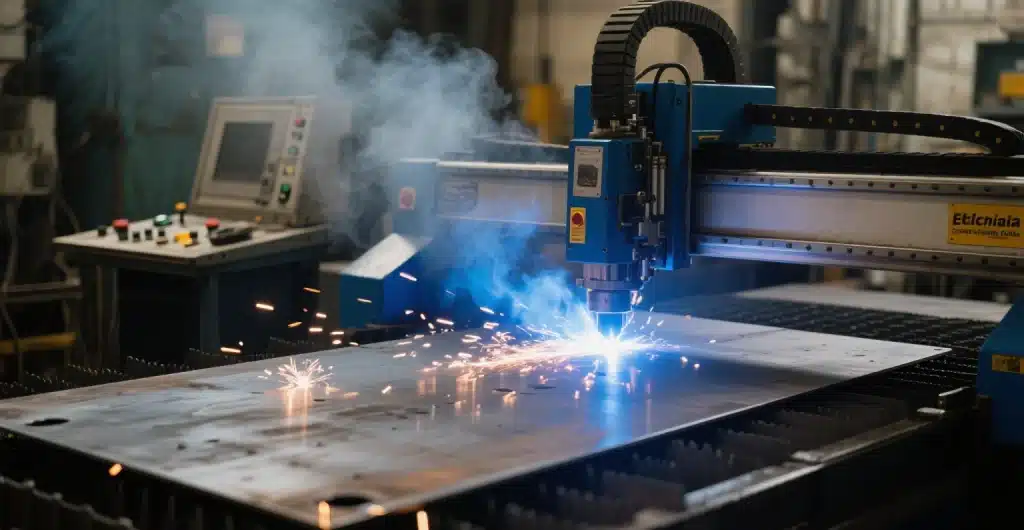
Laser Cutter vs. Plasma Cutter: Which One Should You Choose?
Choose a Laser Cutter if you need:
- Extremely precise cuts (within the width of two human hairs)
- Smooth edges that don’t need extra finishing work
- The ability to cut metals, woods, plastics, and more
- Lower costs over the life of the machine
Choose a Plasma Cutter if you need:
- Fast cutting of very thick metal (over 1 inch)
- Lower upfront equipment cost
- Rough cuts where appearance isn’t important
When comparing these two technologies, think beyond just cutting metal—consider the quality you’ll get, what markets you can serve, and your total expenses over years of use.
Side-by-Side Comparison: Laser vs. Plasma
Here’s how these cutting technologies stack up on the features that matter most:
| Feature | Laser Cutter | Plasma Cutter |
|---|---|---|
| How Precise? | Exceptional (within 0.03mm) | Good (within 0.1mm) |
| Edge Smoothness | Very smooth, no burrs | Rougher, needs cleanup |
| Materials It Can Cut | Metals, woods, plastics, ceramics | Only conductive metals |
| Speed on Thin Metal | Very fast | Slower |
| Speed on Thick Metal | Good up to 1 inch | Faster on thick materials |
| Starting Price | Higher ($13,000-$2M+) | Lower ($200-$65,000) |
| Hourly Operating Cost | $20 | $15 |
| Cut Width | Very narrow (0.15mm) | Wide (3.8mm+) |
| Extra Finishing Needed | Little to none | Often requires grinding |
Why Laser Cutters Produce Better Quality
Narrower Cuts Mean Less Waste
A laser cutter makes an incredibly narrow cut—about 0.15mm wide, which is thinner than two sheets of paper stacked together. Think of it like drawing with a sharp pencil versus a thick marker.
Plasma cutters create much wider cuts—typically 3.8mm or more—which removes more material and makes detailed work impossible. This matters especially in industries like aerospace parts, medical devices, and electronics, where every millimeter counts.
Real-world example: When we cut 1,000 parts from the same sheet of metal, laser cutting wasted 23% less material than plasma. That adds up to major savings when you’re working with expensive metals like stainless steel.
Cleaner Cuts Save Time and Money
Parts cut with lasers come off the machine with smooth, clean edges that are usually ready to weld or assemble immediately. This eliminates the need for grinding, filing, or other finishing work.
Plasma cutting often leaves behind rough edges and slag (metal debris) that must be manually cleaned off every single part. This hidden cost quickly adds up—both in labor time and consumable grinding wheels—erasing any money you saved buying a cheaper machine.
From our testing: Laser cutting eliminates an average of 3-7 minutes of finishing work per part compared to plasma. On a production run of 200 parts, that’s 10-23 hours of saved labor.
Less Heat Damage to Your Material
Lasers create a very small “heat-affected zone” around the cut—the area where the metal’s properties might change from heat exposure. This keeps your material strong and stable, which matters for parts that will be welded or put under stress.
Plasma cutting spreads heat over a wider area, which can weaken the metal around the cut and cause warping. For critical applications where material strength is certified and guaranteed, understanding laser materials processing standards becomes crucial.

Laser Cutters Work with Many Materials
Unlike plasma cutters that only work with metals that conduct electricity, laser cutters can process many different materials:
- Metals: Stainless steel, carbon steel, aluminum, brass, copper
- Woods: Plywood, hardwoods, MDF
- Plastics: Acrylic, polycarbonate, ABS
- Fabrics: Leather, textiles, felt
- Other: Ceramics, glass, cardboard
This flexibility is a huge business advantage. One laser cutter can serve multiple markets—from metal signs to furniture to electronics housings. You’re not locked into only metal work.
Why Laser Cutting Systems Cost Less Over Time
Looking Beyond the Price Tag
Yes, plasma cutters cost less to buy—sometimes 2-5 times less than laser systems. But smart business owners look at the “total cost of ownership,” which includes everything you’ll spend operating the machine over 5-10 years.
When you add up electricity, replacement parts, labor costs, and material waste, laser cutting often delivers better value despite the higher initial price.
How Laser Cutters Save Money Long-Term
- Replacement Parts Last Longer: Plasma torches need new electrodes and nozzles every 1-4 hours of cutting. Laser protective lenses last 200-300 hours or more—far fewer interruptions and lower ongoing costs.
- Lower Energy Bills: Modern fiber laser technology converts up to 40% of electrical energy into cutting power, compared to plasma’s 10-15% efficiency. This means lower electricity costs every single day.
- No Finishing Labor: Eliminating 3-7 minutes of grinding and cleaning per part adds up fast. On 500 parts per month, that’s 25-58 hours of saved labor monthly.
- Less Material Wasted: The narrow laser cut means you waste less expensive raw material on every sheet you process, and you can fit more parts onto each sheet.
When Plasma Cutting Makes Sense
Plasma cutters work best for heavy-duty jobs where speed on very thick metal (over 1 inch) is the priority and a rough finish is acceptable.
Best uses for plasma:
- Cutting thick structural steel for buildings (2 inches or more)
- Scrap yards and demolition work
- Basic metal fabrication where appearance doesn’t matter
- Projects with tight budgets requiring lower initial investment
For these specific applications, plasma’s faster cutting speed on thick materials justifies accepting lower quality. But for most sheet metal work under 3/4 inch thick, laser cutting is both faster and better quality.
What We’ve Learned from Hands-On Testing
Over eight years, our facility has logged over 12,000 operating hours using both plasma and laser cutting systems. This real-world experience revealed important differences you won’t find in sales brochures:
Maintenance reality: Our plasma systems need new consumable parts every 2-3 hours during production, while laser protective windows need replacement about every 200-300 hours. That’s a huge difference in how often you stop work to change parts.
Consistent quality: Laser cut quality stays the same throughout the life of the consumables. Plasma cut quality gets noticeably worse as the electrode wears down, requiring constant operator attention.
Easier to learn: Training new operators to produce quality plasma cuts took 4-6 weeks on average. Laser system operation was mastered in 1-2 weeks because the machines are more automated and consistent.
These real-world insights show why businesses focused on quality, efficiency, and growth choose laser technology.
Conclusion
For businesses that value precision, professional-quality finishes, material flexibility, and lower cost per part, the laser cutter is the better long-term investment. Whether you need a tube laser for pipes and tubes or a sheet cutter for flat materials, laser technology delivers the quality and efficiency that drive profitable growth.
The choice between plasma and laser isn’t just technical—it’s strategic. While plasma might save money today, laser cutting positions your business to take on premium projects, serve more markets, and build sustainable long-term profits.
FAQs
A: Yes, much more precise. Laser cutters achieve accuracy within 0.03mm (about the width of two human hairs) with cuts as narrow as 0.15mm. This allows intricate details that are impossible with plasma cutting. Plasma cutters typically achieve accuracy within 0.1mm with cuts exceeding 3.8mm wide. For work requiring tight dimensional accuracy, laser cutting is clearly superior.
A: Yes, and this is one of laser cutting’s biggest advantages. Lasers can cut wood, acrylic, plastic, fabric, leather, ceramics, and many other materials. Plasma cutters work only with electrically conductive metals. This material versatility lets you serve multiple markets and diversify your business.
A: Laser cutters require a higher initial investment ($13,000-$2M+), but the total cost of ownership is often lower. When you account for energy efficiency, fewer replacement parts, eliminated finishing labor, and reduced material waste over 5-10 years, laser systems frequently deliver better financial returns despite higher upfront costs.
A: It depends on material thickness. Laser cutters are substantially faster on thin to medium materials (under 1/2 inch), often cutting 2-3 times faster than plasma. Plasma cutters are only faster on very thick metal (over 1 inch), but this speed comes with rougher cuts requiring finishing work. For most sheet metal production, laser cutting offers superior throughput.
A: Yes, modern fiber laser cutters effectively cut steel up to 1-1.5 inches thick, with some high-power systems cutting up to 2.4 inches. However, cutting speed decreases significantly above 3/4 inch thickness. For steel thicker than 1.5 inches where edge quality isn’t critical, plasma cutting offers faster speeds and remains the more practical choice.