
The laser welding machine price spectrum is vast, ranging from under $3,000 for entry-level models to over $1,000,000 for sophisticated industrial robotic systems. This significant variation is primarily driven by the laser’s power (wattage) and the degree of automation, from handheld devices to fully robotic cells. However, the initial purchase price is just one aspect of the overall investment. A thorough analysis of the Total Cost of Ownership (TCO) reveals that laser welding can be a more cost-effective solution in the long run compared to traditional welding methods like TIG or MIG, thanks to its speed, precision, and reduced need for post-processing.
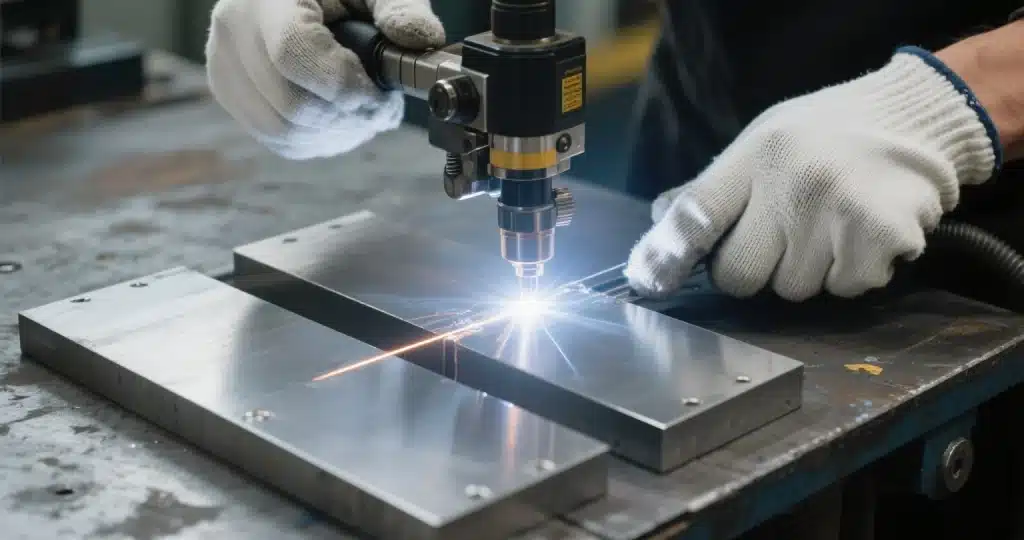
Laser Welder Price Overviews
For a quick overview of what you can expect to invest, here is a scannable cheat sheet of typical price ranges for different types of laser welding machines in 2025:
| Machine Type | Price Range |
| Handheld Laser Welders | $3,500 – $50,000+ |
| CNC Automated Welders | $30,000 – $150,000+ |
| Industrial Robotic Cells | $50,000 – $1,000,000+ |
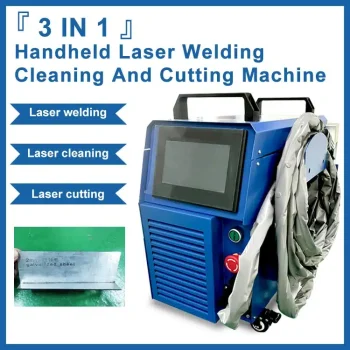
| Multi-Function (3-in-1 & 4-in-1) Systems | $3,600 – $50,000+ |
4 Key Factors That Determine Price
Understanding the primary factors that influence the price of a laser welding machine is crucial for making an informed purchasing decision. The cost is not arbitrary; it’s a reflection of the machine’s capabilities, components, and the level of automation it offers.
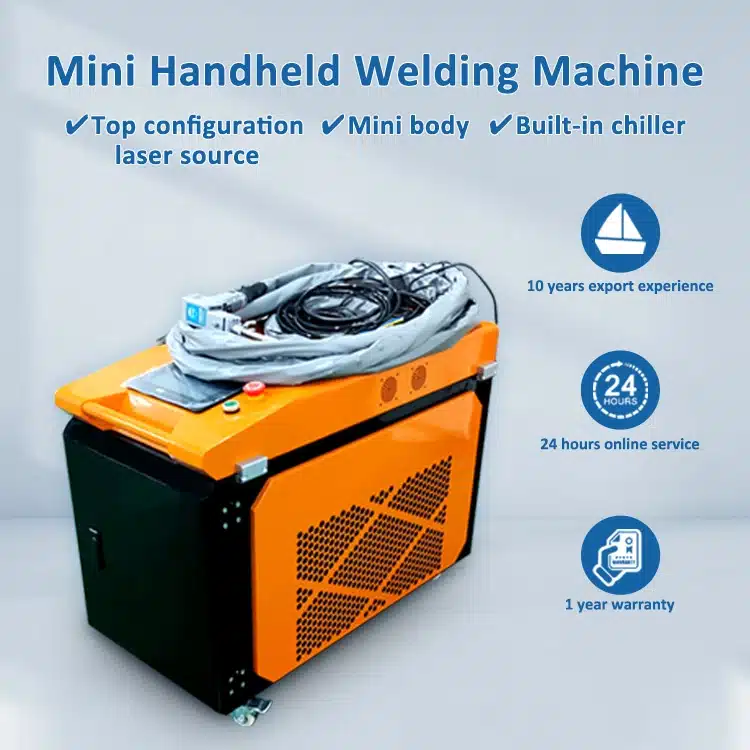
1. Machine Type
The most significant price determinant is the type of machine, which dictates its application and level of automation.
- Handheld Welders (The Entry Point): Ideal for portability, small workshops, and intricate, low-volume work, handheld laser welders are the most accessible entry into this technology. Basic models can be found for between $4,700 and $8,000. Premium, brand-name systems, such as the IPG LightWELD, command a higher price, ranging from $17,990 to $38,950, offering enhanced features and reliability.
- CNC Welders (For Precision & Production): When repeatability and high precision are paramount, CNC (Computer Numerical Control) laser welders are the answer. The substantial price increase to $30,000 – $150,000+ is not just for the laser source itself but for the entire automation infrastructure. This includes the gantry system, high-precision motors, and sophisticated control software that enables automated, pre-programmed welding paths.
- Robotic Welders (The Apex of Automation): For high-volume, industrial-scale production, robotic laser welding cells are the ultimate solution. With prices starting at $50,000 and reaching over $1,000,000, the investment covers the robotic arm, the laser source, advanced safety systems, and, critically, significant integration and programming fees, which can often double the initial hardware cost.
2. Laser Power (Wattage)
The laser’s power, measured in watts (W), directly correlates with its ability to weld thicker materials at faster speeds. Consequently, higher power translates to a higher price. A general rule of thumb in the industry is that doubling the laser power can increase the machine’s cost by 15% to 30%.
Here is a typical price breakdown for handheld laser welders based on their power output:
- 1000W: ~$4,600 – $8,000
- 1500W: ~$4,800 – $15,000
- 2000W: ~$6,800 – $18,000+
- 3000W: ~$9,800+
3. Laser Source Brand
The heart of any laser welding machine is its laser source, and the brand of this component plays a significant role in the overall cost and long-term performance. The market is generally divided into two tiers:
- Premium Tier (e.g., IPG, TRUMPF): These brands are renowned for their exceptional reliability, longevity, and robust customer support. This reputation for quality comes at a higher price but is often justified by lower downtime and consistent performance.
- Value Tier (e.g., Raycus, Maxphotonics): These manufacturers offer more budget-friendly laser sources that are commonly found in lower-priced machines. While the upfront cost is attractive, buyers should consider potential risks related to long-term service and support.
4. Optional Features & Add-Ons
To enhance the capabilities and safety of a laser welding machine, a variety of optional features and add-ons are available, each contributing to the final cost:
- Automatic Wire Feeder: $390 – $2,750+
- Wobble Welding Head: ~$500 – $2,000+ (for the head itself)
- Fume Extraction System: $2,000 – $8,000
- Advanced Cooling System (Water Chiller): $2,000 – $15,000
- Vision Systems & Quality Control: $10,000 – $50,000+
Calculating the Total Cost of Ownership
A savvy business owner knows that the initial purchase price is only part of the financial picture. The Total Cost of Ownership (TCO) provides a more holistic view of the investment over the machine’s lifespan, encompassing daily operational costs, maintenance, and labor.
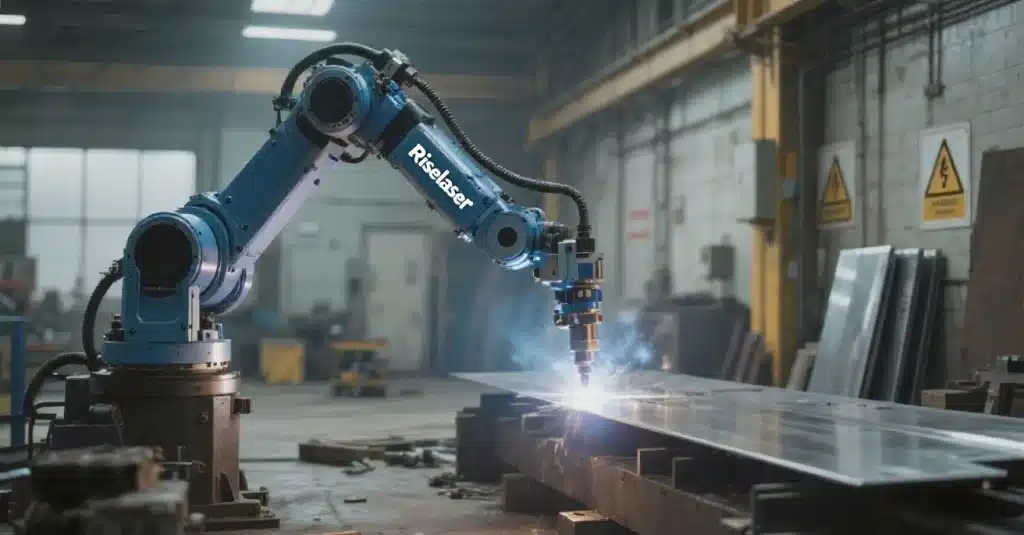
Daily Operational Costs
- Energy: A 1kW laser system consumes approximately $1.50 to $3.00 of electricity per hour of operation.
- Consumables: This is an area where laser welding often demonstrates a significant cost advantage over traditional methods. Annual costs for shielding gas can range from $500 to $2,000, and replacement parts like nozzles and lenses can cost between $1,000 and $5,000. This is often substantially less than the cost of filler materials, grinding discs, and other consumables associated with MIG and TIG welding.
Maintenance, Service, and Repairs
As a general guideline, businesses should budget 2% to 5% of the machine’s initial cost for annual maintenance. For mission-critical operations, service contracts can provide peace of mind and range from $5,000 to $20,000 per year. An extended warranty can also be a prudent investment to safeguard against unexpected repair costs.
Training and Labor
While laser welding can significantly reduce the labor hours required for a project due to its high speed, it may necessitate a more skilled, and therefore higher-paid, operator. The initial training for an operator can cost between $2,000 and $5,000 per person. However, the increased efficiency often leads to a positive return on investment. Real-world case studies have shown that the switch to laser welding can lead to a 30-50% increase in productivity, drastically reducing labor costs per unit. For example, a manufacturing firm was able to shorten its production cycle for small metal products from ten days to just six or seven days after implementing fiber laser welding.
Conclusion
The price of a laser welding machine is a complex figure, intricately linked to its power, level of automation, and the brand of its core components. The optimal choice is not necessarily the cheapest or the most expensive, but the one that offers the best Total Cost of Ownership for your specific applications.
To ensure you make a sound investment, follow this simple buyer’s checklist:
- Define Your Application: Clearly identify the materials and thicknesses you will be welding.
- Determine Your Volume: Are your needs for occasional, hobbyist use or high-volume production?
- Calculate Your Total Budget: Factor in both the upfront purchase price and the long-term TCO.
- Request Demos: Before making a final decision, request demonstrations from shortlisted vendors to see the machines in action and validate their performance on your materials.
FAQs
Entry-level and hobbyist models, often from online marketplaces, can start as low as $2,500 to $3,800.
These are very popular and have a wide price range, from about $3,600 for basic models to over $50,000 for professional-grade systems.
It can save you significant money upfront (e.g., a used IPG system for $16,750). However, you must consider the risks: no warranty, the consumed lifespan of the laser source, and potential difficulty finding parts. Machines depreciate about 15-20% per year.