
In the rapidly evolving landscape of metal fabrication, the year 2026 marks a significant turning point for welding technology. The handheld fiber laser welder has transitioned from a high-end niche tool to an essential powerhouse for workshops of all sizes. Whether you are in automotive manufacturing, aerospace, or custom metal art, understanding how to choose the right machine is critical for maintaining a competitive edge.
What is a Handheld Fiber Laser Welder?
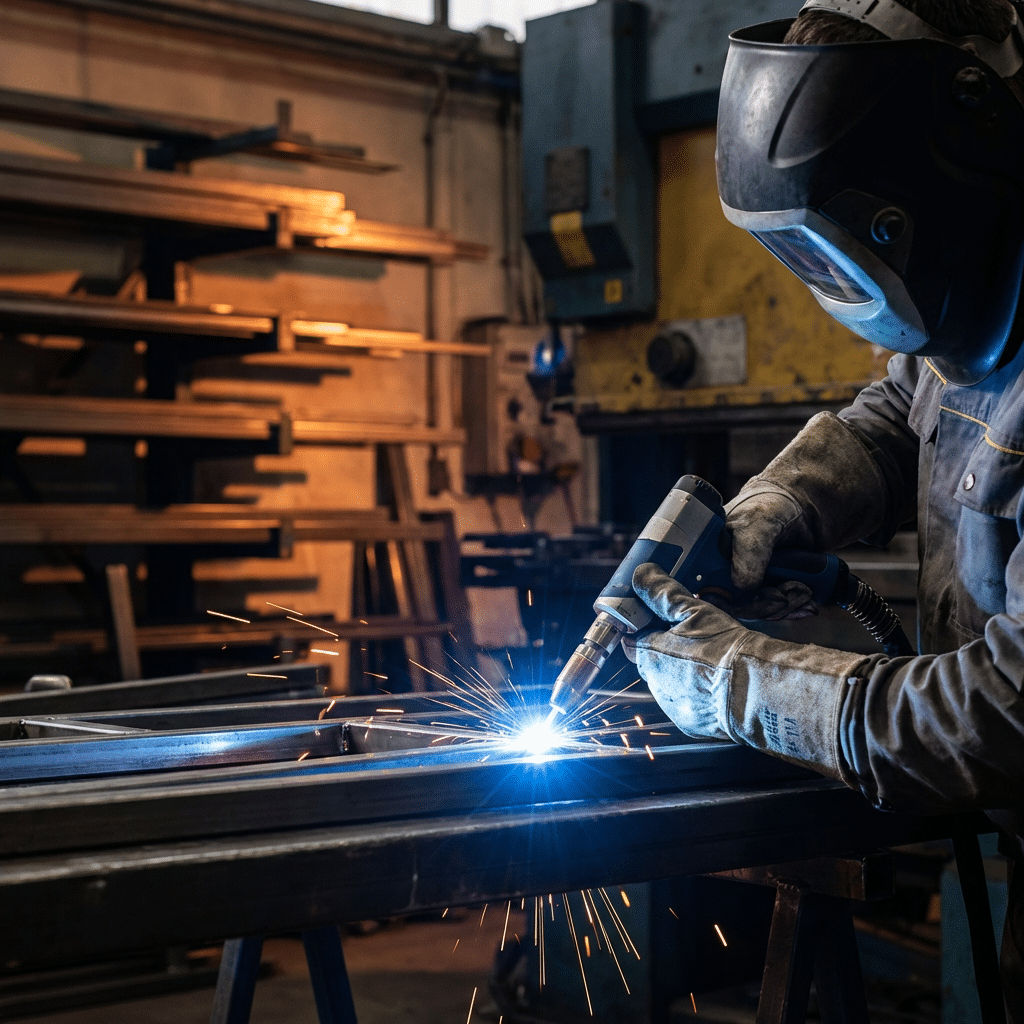
A handheld fiber laser welder is a portable welding device that utilizes a high-energy laser beam generated through optical fibers to join metal parts. Unlike traditional stationary laser systems, the handheld version offers unparalleled flexibility, allowing operators to move around large workpieces and reach difficult angles with ease. It combines the precision of laser technology with the ergonomic handling of a manual welding torch.
How Handheld Fiber Laser Welding Works
The core of the system is a fiber laser source, which produces a concentrated beam of light. This beam is transmitted through a flexible fiber optic cable to a welding head held by the operator. When the beam hits the metal surface, the high energy density causes the material to melt almost instantaneously, creating a deep and narrow weld pool. This process, often referred to as ‘keyhole welding,’ results in high-strength joints with minimal heat-affected zones (HAZ).
Core Advantages: Laser vs. Traditional Welding (MIG/TIG)
Why are manufacturers switching to laser welding in 2026? The benefits are clear and measurable:
- Superior Speed: Laser welding is typically 4-10 times faster than TIG welding, significantly increasing production throughput.
- Minimal Deformation: Due to the concentrated heat source, there is very little thermal distortion in the workpiece, reducing the need for post-weld straightening.
- Ease of Use: While TIG welding requires years of practice to master, a novice can produce professional-grade laser welds with just a few hours of training.
- Deep Penetration: Even with a handheld unit, you can achieve deep penetration in thick materials that would require multiple passes with MIG or TIG.
- Aesthetic Finish: The welds are smooth and often require no grinding or polishing, saving labor costs.
Complete Buying Guide: Key Parameters to Consider
When purchasing a handheld fiber laser welder in 2026, you must evaluate several technical specifications to ensure the machine fits your specific needs.
1. Laser Power (Watts)
Power is the most critical factor determining welding thickness and speed. Common options include:
- 1000W: Ideal for thin sheets (up to 3mm stainless steel/carbon steel).
- 1500W: The ‘sweet spot’ for most workshops, capable of welding up to 5mm steel efficiently.
- 2000W – 3000W: Heavy-duty units for thick plates (up to 8mm+) and highly reflective materials like aluminum and copper.
2. Cooling System
Continuous operation requires robust cooling. Industrial-grade water chillers are standard for 1500W+ models to ensure the laser source and welding head stay within safe temperature limits, preventing downtime and extending component life.
3. Fiber Cable Length
For large-scale fabrications, the length of the fiber cable determines your mobility. Most standard units offer 10 meters, but custom lengths up to 15 or 20 meters are available for specialized applications.
Power Selection & Thickness Comparison Table
| Laser Power | Stainless Steel (Max) | Carbon Steel (Max) | Aluminum (Max) | Recommended Industry |
|---|---|---|---|---|
| 1000W | 3mm | 3mm | 2mm | Kitchenware, Signage |
| 1500W | 5mm | 5mm | 3mm | Furniture, Auto Parts |
| 2000W | 8mm | 8mm | 5mm | Construction, Machinery |
| 3000W | 10mm+ | 10mm+ | 8mm | Heavy Industrial, Shipbuilding |
Application Industries in 2026
The versatility of the handheld fiber laser welder has made it a staple in numerous sectors:
- Aerospace: High-precision joining of lightweight alloys.
- Automotive: Rapid body repairs and assembly line spot welding.
- Home Appliances: Seamless welding for refrigerators, ovens, and sinks.
- Medical Devices: Clean, sterile welds for surgical instruments and implants.
- Custom Fabrication: Fast turnaround for bespoke metal art and architectural elements.
Recommended Solutions for 2026
To get the best results, we recommend exploring the latest models that offer high stability and integrated safety features. For a dedicated welding solution, the Handheld Fiber Laser Welder is the industry standard for performance and reliability.
If your workshop requires more versatility, consider the 3-in-1 Laser Welding Cleaning Cutting Machine. This multi-functional unit allows you to switch between welding, rust removal, and thin-metal cutting, providing maximum ROI for your investment.
Conclusion
Investing in a handheld fiber laser welder in 2026 is a strategic move for any metalworking business. By considering the power requirements, cooling efficiency, and the specific needs of your industry, you can select a machine that not only improves your weld quality but also slashes your labor costs and production time. Ready to upgrade your workshop? Start with the right guide and the right technology.