
Yes, you can absolutely laser clean wood—and when done right, the results are nothing short of incredible. But it’s a precision tool, not a blunt instrument. A specialized laser can safely strip away coatings, soot, or grime without damaging the delicate wood underneath.
This process uses intense pulses of light to vaporize surface contaminants before the wood itself gets hot enough to burn. It’s a non-contact, non-abrasive method that preserves the material’s integrity.
This guide will cover exactly how it works, what it can (and can’t) remove, its safety, the cost, and how it stacks up against old-school methods like sanding and chemical stripping.

How Does Laser Cleaning Wood Work?
Thinking a laser can clean wood without setting it on fire seems counterintuitive. But the secret isn’t magic; it’s just very, very fast physics. The technology relies on a principle called ablation and a specific type of laser.
It’s All About “Ablation,” Not Burning
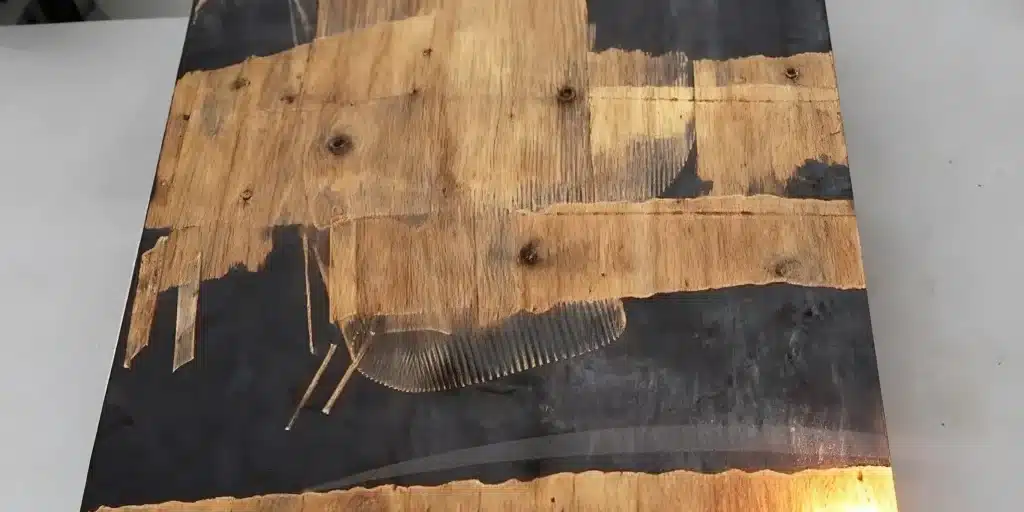
Laser ablation is the core process. The laser delivers a powerful burst of energy so quickly that the paint, varnish, or grime on the surface instantly absorbs it and vaporizes—turning from a solid straight into a gas.
Think of it like flicking a single drop of water onto a scorching hot skillet. It sizzles away in a flash without significantly heating up the whole pan. A pulsed laser for wood cleaning does the same thing to the surface layer, leaving the underlying wood cool and untouched.
Pulsed Lasers vs. Continuous Lasers
The key to safely performing laser stripping on wood is using a pulsed laser. These machines, like the ones from Riselaser, deliver their energy in incredibly short, powerful bursts measured in nanoseconds.
This is completely different from a continuous wave (CW) laser, like those in many metal cutters. A CW laser fires a constant beam of energy, which would dump too much heat into the wood and would absolutely burn it. For wood, it must be a pulsed laser.

What Can You Actually Remove from Wood with a Laser?
A laser cleaning machine for wood is a versatile tool, but it has its strengths and limitations. Knowing what it can and can’t handle is crucial for getting the results you want.
Where Laser Cleaning Shines
- Paint and Varnish: Laser paint removal from wood is a primary application. It’s fantastic for stripping away old, layered finishes from furniture, architectural details, or antiques without harming the original craftsmanship.
- Soot and Smoke Damage: This is a huge advantage. Laser cleaning for fire damage is exceptionally effective because it vaporizes the soot particles. Unlike scrubbing, which can smear soot deeper into the wood grain, the laser removes it cleanly.
- Dirt, Grime, and Biological Growth: Lasers can easily ablate surface contaminants like built-up grime, pollution, and even mold or algae from wooden surfaces, restoring their natural look.
What Laser Cleaning CANNOT Do
- Deep, Penetrating Stains: This is the main limitation. If a stain (like ink or oil) has soaked deep into the wood fibers, there is no “layer” for the laser to remove. Trying to chase the stain would mean ablating and destroying the wood itself.
- Certain Modern Coatings: Some highly resistant modern finishes, such as two-part epoxies or thick polyurethanes, can be very difficult for a laser to remove efficiently. They often require too much energy, which puts the underlying wood at risk.
Laser Cleaning vs. Traditional Methods
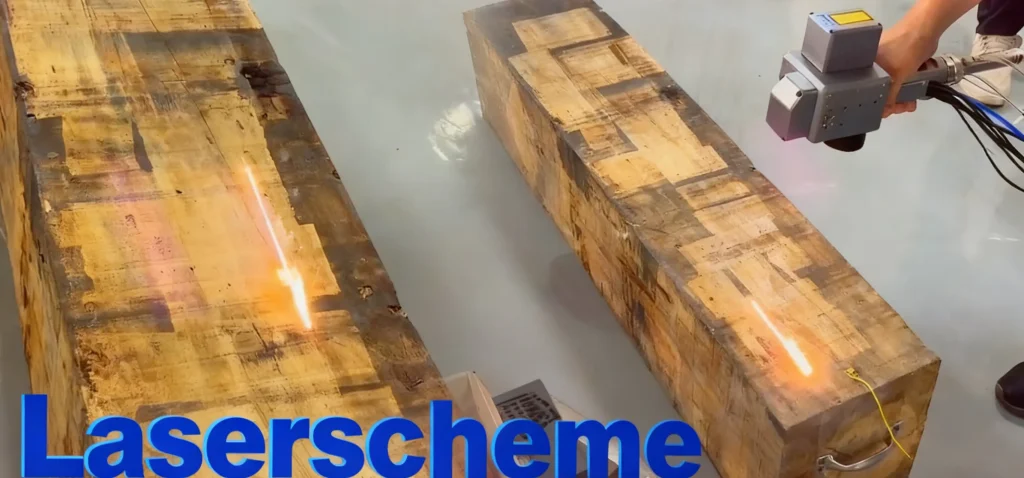
How does this futuristic method stack up against the tried-and-true techniques? The differences are stark, especially when it comes to precision and safety. Let’s compare laser cleaning vs. sanding and chemical stripping.
Precision and Preservation
- Laser Cleaning: Preserves every detail. Because it’s a non-contact process, it protects the original wood grain, delicate carvings, and historical tool marks. There are no scratches, no rounding of sharp edges.
- Sanding: Inherently abrasive. Sanding works by scratching away the surface, which removes wood along with the finish. It inevitably flattens details and can destroy the patina on antiques.
- Chemical Stripping: Messy and risky. Solvents can cause the wood grain to swell and raise, sometimes leading to discoloration or leaving a chemical residue behind that affects the new finish.
Safety and Environmental Impact
- Laser Cleaning: Eco-friendly and clean. There are no chemicals, solvents, or abrasives. The only byproduct is the vaporized contaminant, which is immediately captured by a fume extraction system.
- Sanding: Creates hazardous dust. Sanding produces large volumes of airborne dust, which can contain harmful particles from old paint (like lead) and is a known respiratory hazard.
- Chemical Stripping: Toxic and hazardous. This method involves volatile organic compounds (VOCs) that are harmful to breathe and creates a toxic sludge that requires special disposal.
Comparison Summary
| Feature | Laser Cleaning | Sanding | Chemical Stripping |
| Precision | Excellent | Poor | Fair |
| Surface Damage | None (if done correctly) | High | Moderate (grain swelling) |
| Environmental Impact | Low | Moderate (dust) | High (toxic waste) |
| Operator Safety | High (with PPE) | Low (dust inhalation) | Low (chemical exposure) |
| Speed | Fast on large areas | Moderate | Slow (requires dwell time) |
Is Laser Cleaning Safe?
The question “Is laser cleaning safe for wood?” is a valid one. The answer is yes, but only when proper safety protocols are strictly followed. The risks are completely manageable with the right equipment and training.
The Risk of Charring
Scorching the wood is a real possibility, but it’s almost always due to operator error—setting the power too high or moving the laser head too slowly.
The solution is simple: always perform a spot test. Before starting on a visible area, the operator must test the settings on a small, hidden spot to perfectly calibrate the laser’s power and speed for that specific coating and wood type.
Fumes and Eye Safety
This is non-negotiable. Two pieces of safety equipment are mandatory:
- Fume Extraction: The process works by turning coatings into vapor. This fume can contain harmful substances (especially from lead paint or old varnishes). A high-quality fume extraction system must be used to capture and filter these fumes at the source.
- Eye Protection: The intense, focused light from the laser can cause permanent eye damage instantly. Anyone in the operating area must wear certified laser safety goggles that are specifically rated for the wavelength of the laser being used.
Is a Laser Cleaner Worth the Cost?
This technology is impressive, but it comes with a significant price tag. Deciding if it’s the right choice often comes down to budget and the value of the item being restored.
The High Initial Investment
Professional-grade laser cleaning machines are a major investment. Prices can range from tens of thousands to over a hundred thousand dollars depending on the power and features. This is why it’s primarily used by professional restoration services.
Long-Term Savings and Value
The return on investment (ROI) comes from a few key areas:
- No Consumables: You never have to buy sandpaper, stripping pads, or chemical solvents again.
- Reduced Labor: Lasers often work much faster than manual methods, significantly cutting down on labor hours.
- No Waste Disposal Fees: There is no chemical sludge or contaminated material to dispose of, eliminating hazardous waste fees.
When It Makes Financial Sense
A laser cleaner is most cost-effective for high-value applications where preserving the original substrate is the top priority. Think of:
- Antique & Furniture Restoration
- Historic & Heritage Building Conservation
- Large-Scale Fire Damage Remediation
For these jobs, the precision, speed, and quality of the result far outweigh the initial cost. Curious about the specific costs for your project? Contact the experts at Laserscheme for a detailed quote.
Conclusion
Laser cleaning is a powerful, precise, and environmentally friendly tool that is revolutionizing wood restoration. It offers a level of quality that traditional methods simply cannot match.
While the high initial cost keeps it in the hands of professionals for now, the trade-off is clear: you get unparalleled precision and preservation. It’s most effective on surface coatings like paint and soot and is not a solution for deep-set stains.
As the technology continues to mature and become more accessible, laser cleaning is poised to become an indispensable tool for anyone serious about preserving the beauty and integrity of wood.
FAQs
A: Pulsed fiber lasers are most common.
A: Yes, but it’s not effective on polyurethane finishes and requires expertise.
A: No, it’s a surface cleaning technology and does not remove wood material.
A: Yes, for stripping coatings, it is significantly faster and requires less manual labor.