
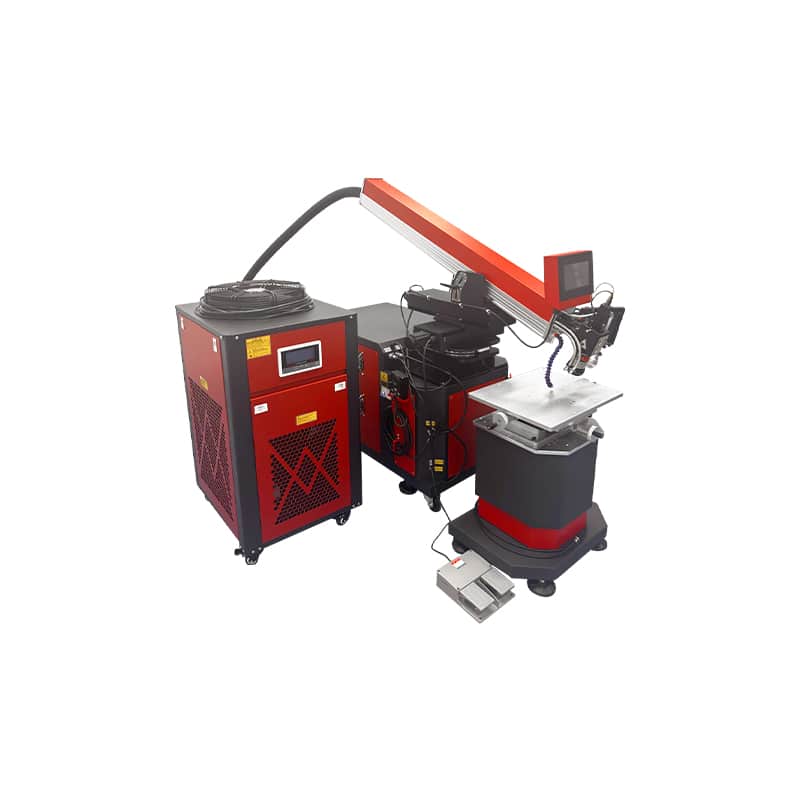
laser solutions for mold repair
Mold Repair
Application of Laser Processing Technology in Mold Manufacturing
1.Current Status of Laser Processing Technology in Mold Manufacturing
With the development of the mold manufacturing industry, the application of laser processing technology in this field has been continuously promoted and expanded. Laser processing equipment and its supporting technologies have gradually matured, evolving from traditional laser cutting and welding to include laser drilling, thermoforming, surface treatment, and other advanced techniques .
3D laser processing has significantly enhanced mold processing technology by providing:
- Higher Processing Accuracy: Achieves micron-level precision.
- Shorter Processing Time: Reduces overall manufacturing time.
- Versatility: Capable of handling complex geometric shapes.
- Improved Surface Quality: Enhances the finish of processed parts.
- Reduced Tooling Costs: Lowers the expenses associated with tooling.
- Enhanced Design Flexibility: Allows for more innovative mold designs.
In the application of laser processing technology in mold manufacturing, enterprises have intensified their research and development efforts to improve both the quality and efficiency of laser processing, thereby meeting market demands. However, high costs and technological challenges remain significant issues for mold manufacturing companies.
In developed regions such as Europe and the United States, laser processing technology is widely utilized in automotive parts, aerospace, and other sectors, forming a complete laser processing industry chain. European and American companies lead in the research and development of laser processing technologies, promoting their application in mold manufacturing through continuous innovation and technical advancements. Due to earlier development, laser processing technology in these regions is more cost-effective and widely adopted in the mold manufacturing industry.
2.Case Analysis of the Application of Laser Cutting in Mold Manufacturing
In the process of plastic mold manufacturing, mold parts require high-precision cutting and processing. Traditional cutting methods like milling and Electrical Discharge Machining (EDM) have limitations, whereas laser cutting technology offers a more flexible and efficient solution. The advantages of laser processing include:
High Precision:
Laser cutting technology can achieve high cutting accuracy, meeting the precision requirements of complex mold parts. By controlling the focus and power of the laser beam, micron-level cutting accuracy is attainable, minimizing errors associated with traditional cutting methods.Good Flexibility:
Laser cutting can handle various shapes and sizes according to design specifications without the need to change tools or adjust equipment settings. This allows different mold parts to be processed on the same equipment, thereby shortening production time and reducing costs.High Processing Efficiency:
Laser cutting operates at high speeds and does not require direct contact with the workpiece surface, which prevents tool wear and damage. This extends the service life of the tools used.

3.The Role of Laser Welding in Mold Parts Repair and Remanufacturing
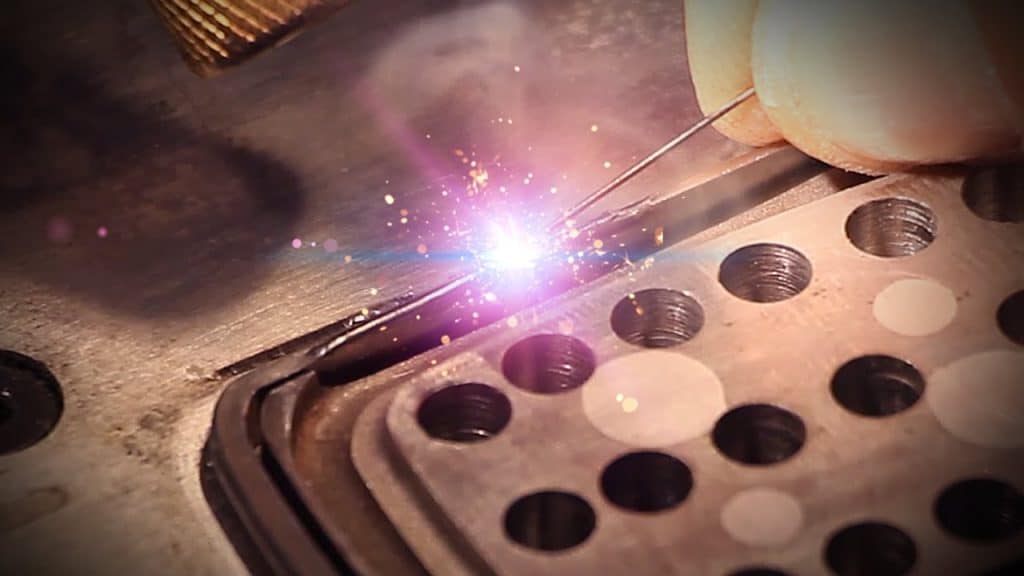
Laser welding machines are essential for repairing precision mold parts used in industries such as digital products, mobile phones, toys, automobiles, and motorcycles. By repairing mold parts, manufacturers can reuse original components, thereby saving production costs and enhancing work efficiency. Additionally, laser welding technology facilitates the modification of mold part designs or sizes, shortening the product development cycle. Key benefits include:
Ease of Operation:
Laser welding machines are user-friendly, enabling faster welding repairs with high accuracy.Minimal Heat Affected Area:
The localized heat from laser welding eliminates the need for preheating, preventing annealing of the welded workpiece post-repair.Precision Welding:
Suitable for repairing wear in mold parts and achieving precise welding in small and intricate areas without causing deformation or pore formation.
Laser Surfacing Repair involves using a high-power monochromatic photon flow as a heat source for welding. This method supports both continuous power and pulse power laser surfacing. Advantages include:
No Vacuum Requirement:
Unlike electron beam welding, laser surfacing does not require a vacuum environment.Accurate Energy Control:
Enables precise welding of difficult-to-weld metals and dissimilar metals by accurately controlling the energy during the process.
Disadvantages:
- Penetration Depth:
The penetration depth of laser surfacing is not as strong as that of electron beam welding.
4.Laser Surface Treatment Technology Improves the Performance of Mold Parts
Laser surface treatment technology offers high-performance surface modification of low-grade materials, achieving an optimal balance between cost-effective part manufacturing and high-performance working surfaces. This technology provides substantial economic and social benefits by:
Adjustable Laser Energy:
The laser beam’s energy can be continuously adjusted without inertia, allowing for precise local hardening treatments on complex-shaped parts that are challenging with conventional methods.CNC Integration:
Utilizing Computer Numerical Control (CNC) systems, different laser hardening treatments can be applied to various parts of a mold, enhancing flexibility and precision.
Advantages:
Surface Strengthening:
Ideal for surface or local area hardening treatments that are difficult to achieve through conventional methods like carburizing, carbonitriding quenching, nitriding, and high-frequency induction heating quenching.Material Replacement:
Enables the replacement of high-grade mold steel with lower-grade mold steel or cast iron and substituting imported mold steel with domestic alternatives.Cost Reduction:
Facilitates enhanced repair (remanufacturing engineering) of molds, thereby reducing the overall cost of mold manufacturing.
The application of laser surface hardening technology in mold manufacturing integrates design, material selection, mold making, inspection, repair, and other processes. This integration shortens design and manufacturing cycles, reduces production costs, alters traditional mold manufacturing methods, and ultimately elevates the entire mold industry’s standards. These advantages—technological, economic, and service-oriented—are unmatched by existing traditional technologies.

Share:
More Posts

Laser Cleaning for Industrial Paint Removal: Full Guide (2026)
In the evolving landscape of industrial maintenance, the demand for more efficient, sustainable, and precise surface preparation has never been higher. Traditionally, industries have relied on chemical stripping, abrasive sandblasting, or manual grinding to remove stubborn industrial coatings. However, as we move into 2026, these methods are increasingly falling out of favor due to environmental
How Does a Fiber Laser Welder Work? The Science Explained (2026 Guide)
The industrial landscape is undergoing a massive transformation, driven by the rapid evolution of laser technology. Among the most revolutionary tools in modern manufacturing is the fiber laser welder. As industries strive for greater precision, faster production cycles, and reduced operational costs, the question often arises: how does a fiber laser welder work? In this
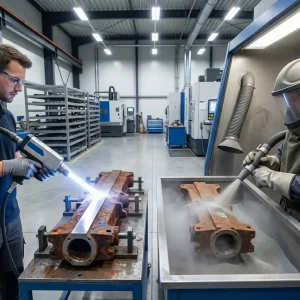
Laser Cleaning vs Sandblasting: Which Is Better? (2026 Comparison Guide)
In the evolving landscape of industrial surface preparation, the battle between traditional methods and emerging technologies has never been more intense. For decades, sandblasting (abrasive blasting) was the undisputed king of rust removal and surface cleaning. However, as we move through 2026, the industrial sector is witnessing a paradigm shift. Sustainability, precision, and operational efficiency
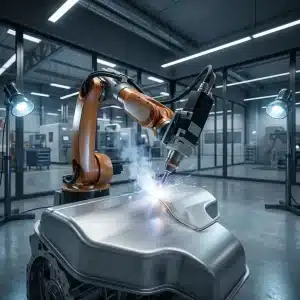
How to Laser Weld Aluminum: Parameters, Tips and Common Errors (2026 Guide)
As we move through 2026, the industrial landscape continues to demand lighter, stronger, and more efficient manufacturing processes. Aluminum has long been the darling of the automotive, aerospace, and renewable energy sectors due to its exceptional strength-to-weight ratio and corrosion resistance. However, for many years, welding aluminum was considered a “dark art” reserved for the
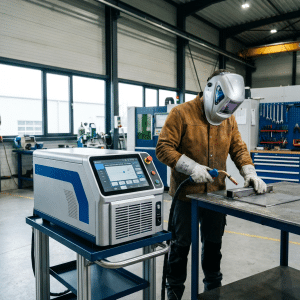
Laser Welding Machine Price Guide 2026: 1000W to 3000W
# Laser Welding Machine Price Guide 2026: 1000W to 3000W In the world of modern metal fabrication, the question is no longer whether to adopt laser technology, but when. As we navigate through 2026, the **laser welding machine price** has reached a tipping point where even small to medium-sized workshops can justify the investment based
Contact Us
- Address: Building 5, , No. 90 Dayang Road, Fuhai Street, Bao'an District, Shenzhen, China, 518103
- Hours: Mon-Fri 9:00AM - 10:00PM
- Phone/Whatsapp: +86-151-0755-2339
- Email: international@riselaser.com